








China · The path behind it

Huineng

慧能 Dajian Huineng · The Sixth Patriarch · 638–713

An illiterate firewood seller from the far south who, as the story goes, heard one line of a sūtra and woke up.

Chan

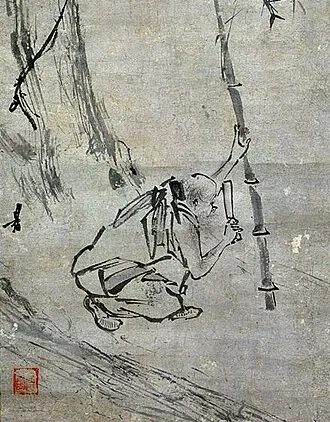
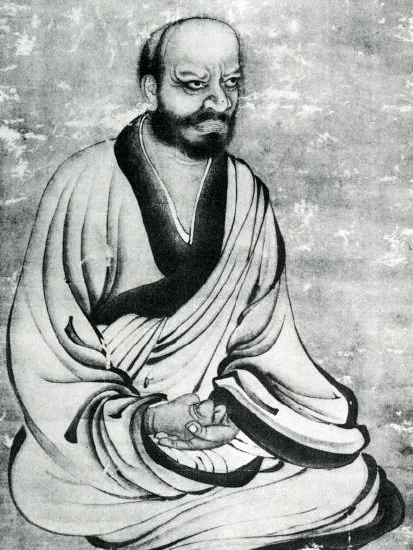
Huineng cutting bamboo, in an ink painting attributed to the Song painter Liang Kai

Huineng (638–713) is honoured as the Sixth Patriarch of Chan (Zen) Buddhism. Historically, very little is known: he was a student of Hongren who taught in the far south of China. The famous story of the illiterate firewood seller who became patriarch comes from the Platform Sūtra, written decades after his death, and it shaped Zen across East Asia.

Why he matters

The Sixth Patriarch

Through the campaign of his student Shenhui, he became the Sixth Patriarch, the one link between the early Chan masters and all later Chan and Zen.

Sudden awakening

The Platform Sūtra in his name teaches sudden awakening: the Buddha nature is already present, and can be seen directly.

The unlettered sage

His legend says that book learning and rank are not what awakening needs. That message spread throughout East Asia.

His life

History says little. The legend, from the Platform Sūtra of about 780, says much. Both are given here, and kept apart. Scroll, and walk it with him.

  1. History

    Born in 638. An early list names him among the ten main students of the master Hongren, as a teacher of regional importance in the far south.

  2. History

    After his death in 713 his family home is given to the sangha as a temple, the one credible detail about his life.

  3. Legend

    A poor, illiterate young man in the far south supports his widowed mother by selling firewood. Hearing someone recite the Diamond Sūtra, he has a flash of insight.

  4. Legend

    He travels to Hongren’s monastery at Huangmei, tells the master that the Buddha nature knows no north or south, and is sent to thresh rice.

  5. Legend

    Hongren asks for verses. Huineng’s answer to the senior monk Shenxiu wins him the robe, and he becomes the Sixth Patriarch.

  6. 8th century

    His student Shenhui campaigns for him as the true heir of Chan.

  7. c. 780

    The earliest version of the Platform Sūtra is written down, some seventy years after his death.

What he taught

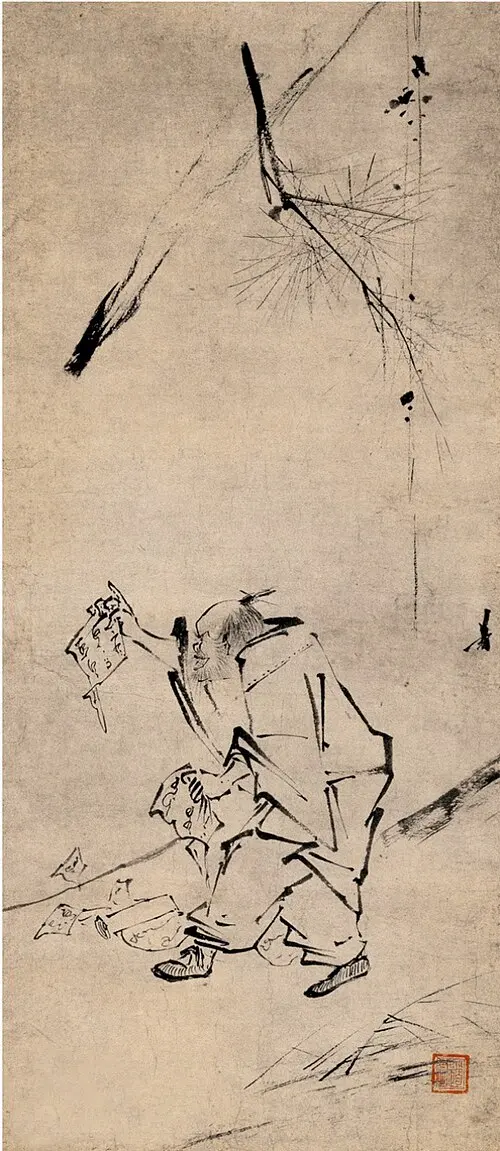
The Sixth Patriarch tearing a sūtra, a Chan painting attributed to Liang Kai
Teaching 01 · Breath

No tree, no stand

Shenxiu wrote that the mind is a mirror that must be polished daily so dust cannot settle.

Huineng’s reply, in the legend, takes the mirror away: there is nothing for the dust to settle on.

“菩提本無樹,明鏡亦無臺”

the Platform Sūtra, Dunhuang text, in Chinese: bodhi has no tree, the bright mirror has no stand
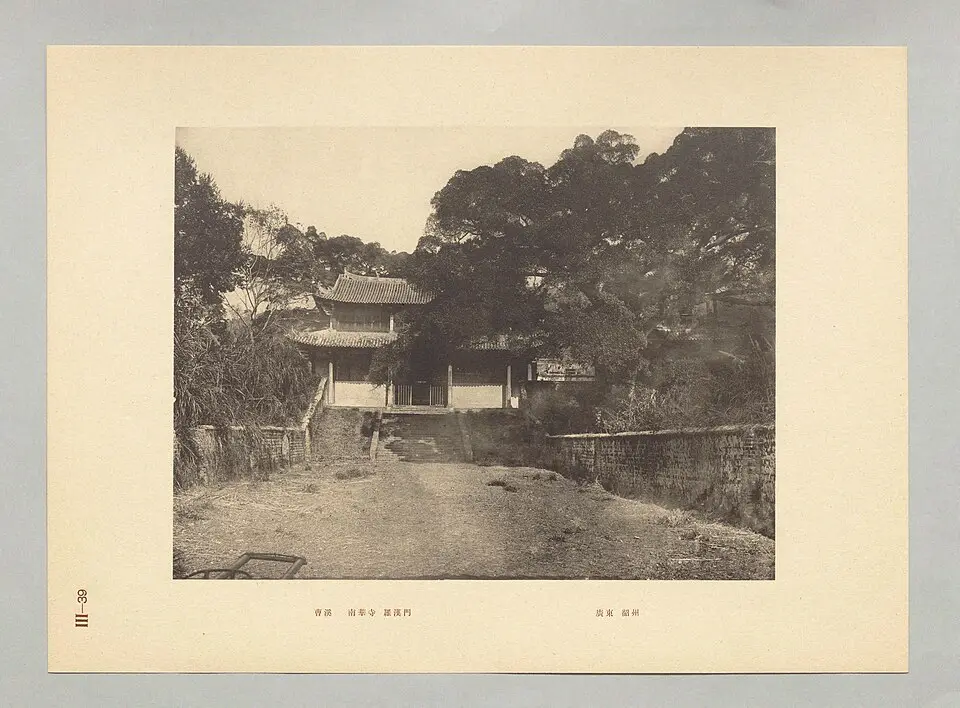
An early photograph of Nanhua temple, where Huineng is said to have taught
Teaching 02 · Movement

Seeing your nature

The Platform Sūtra redefines seated meditation: sitting means not stirring up thoughts, and meditation means seeing the Buddha nature within.

Practice is not a slow climb to a distant goal. It is recognising what is already there.

From John R. McRae, Huineng, Encyclopedia of Religion, 2nd ed. (Encyclopedia.com)

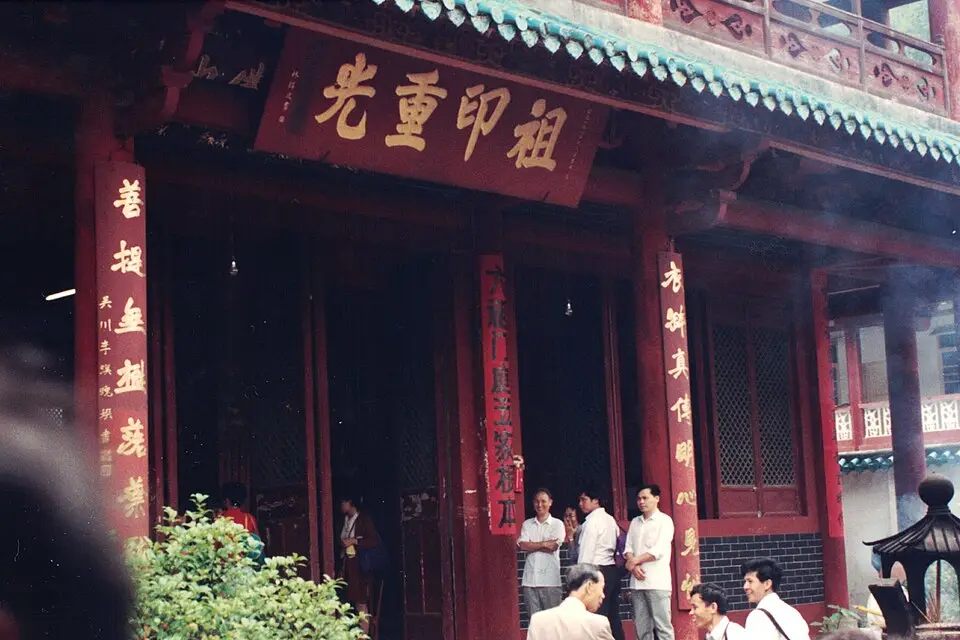
A hall of Nanhua temple in Shaoguan, Guangdong
Teaching 03 · Stillness

Legend and history

Scholars show that the Platform Sūtra story cannot be history: Shenxiu studied with Hongren decades before the contest is set.

The story was still true in another way. It told generations that awakening does not depend on learning or rank.

From John R. McRae, Huineng, Encyclopedia of Religion, 2nd ed. (Encyclopedia.com)

And two more
Teaching 04

North and south

In the legend, Hongren first treats the newcomer from the south as a country bumpkin. Huineng answers that there is no north or south in the Buddha nature.

From John R. McRae, Huineng, Encyclopedia of Religion, 2nd ed. (Encyclopedia.com)

Teaching 05

The root of Chan lines

Tradition makes him the teacher of the masters from whom the Linji and Caodong lines descend, in Japan Rinzai and Sōtō. Historians find no reliable evidence for these links.

John R. McRae, Huineng, Encyclopedia of Religion, 2nd ed. (Encyclopedia.com)
佛性常清淨,何處有塵埃?

Huineng · the Platform Sūtra, Dunhuang text, in Chinese: the Buddha-nature is always clear and pure; where is there room for dust?
For your week · Breath

This week, when you catch yourself polishing your form or your mood, stop for one breath and just look.

Where it happened
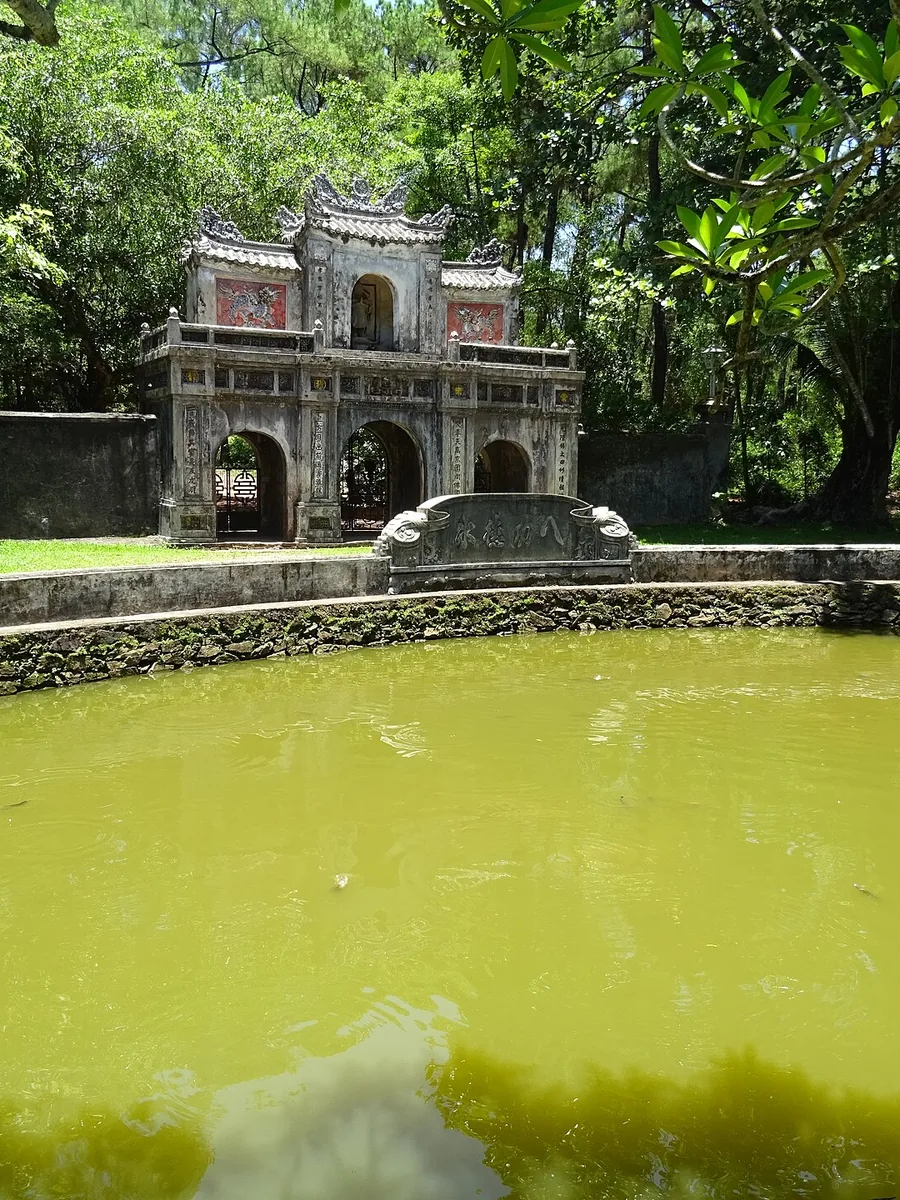
  • Guangdong, the far southHis home in history and in legend.
  • Huangmei, HubeiHongren’s monastery, in the legend.
  • Nanhua temple, ShaoguanWhere he is said to have lived and taught.
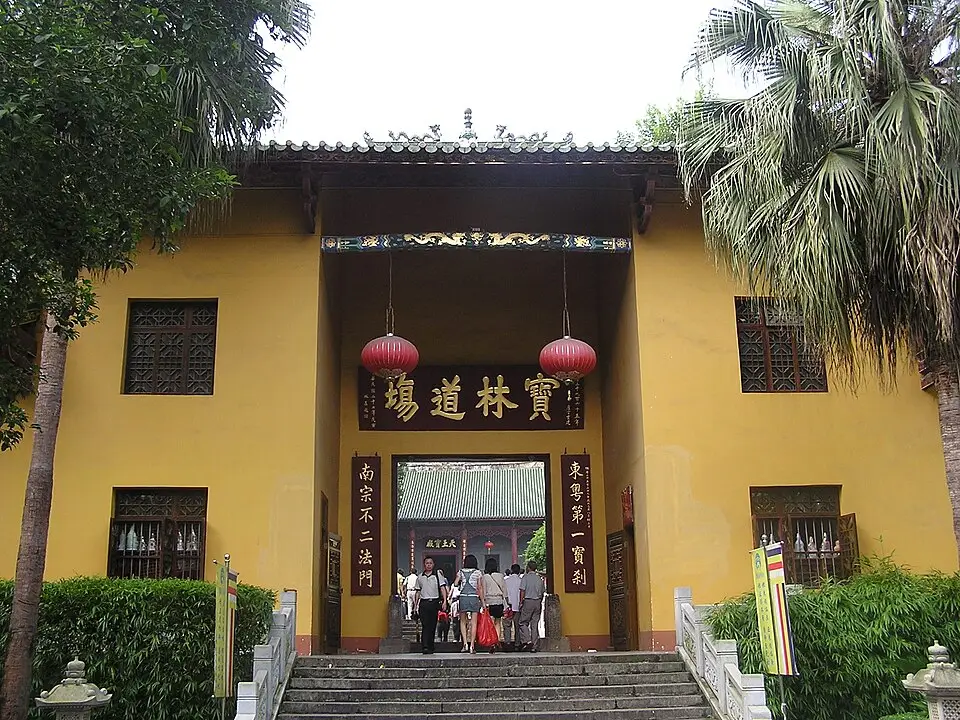
The yellow gate of Nanhua temple, inscribed Baolin Daochang
What remains

The Platform Sūtra became one of the most read scriptures of East Asia, and every Chan and Zen school counts him as its Sixth Patriarch.

Read him yourself
  • The Platform Sūtra of the Sixth Patriarch Translated by Philip Yampolsky, Columbia University Press, 1967.
Sources
Other teachers of China
Next teacher Xuyun Back to · Běnmìng Fó China