




Thailand · The path behind it

King Mongkut

พระบาทสมเด็จพระจอมเกล้าเจ้าอยู่หัว Vajirañāṇo · Rama IV · 1804–1868

A prince who became a monk at twenty, stayed for twenty seven years, and left the robes only to be crowned.

Theravada · Dhammayuttika order

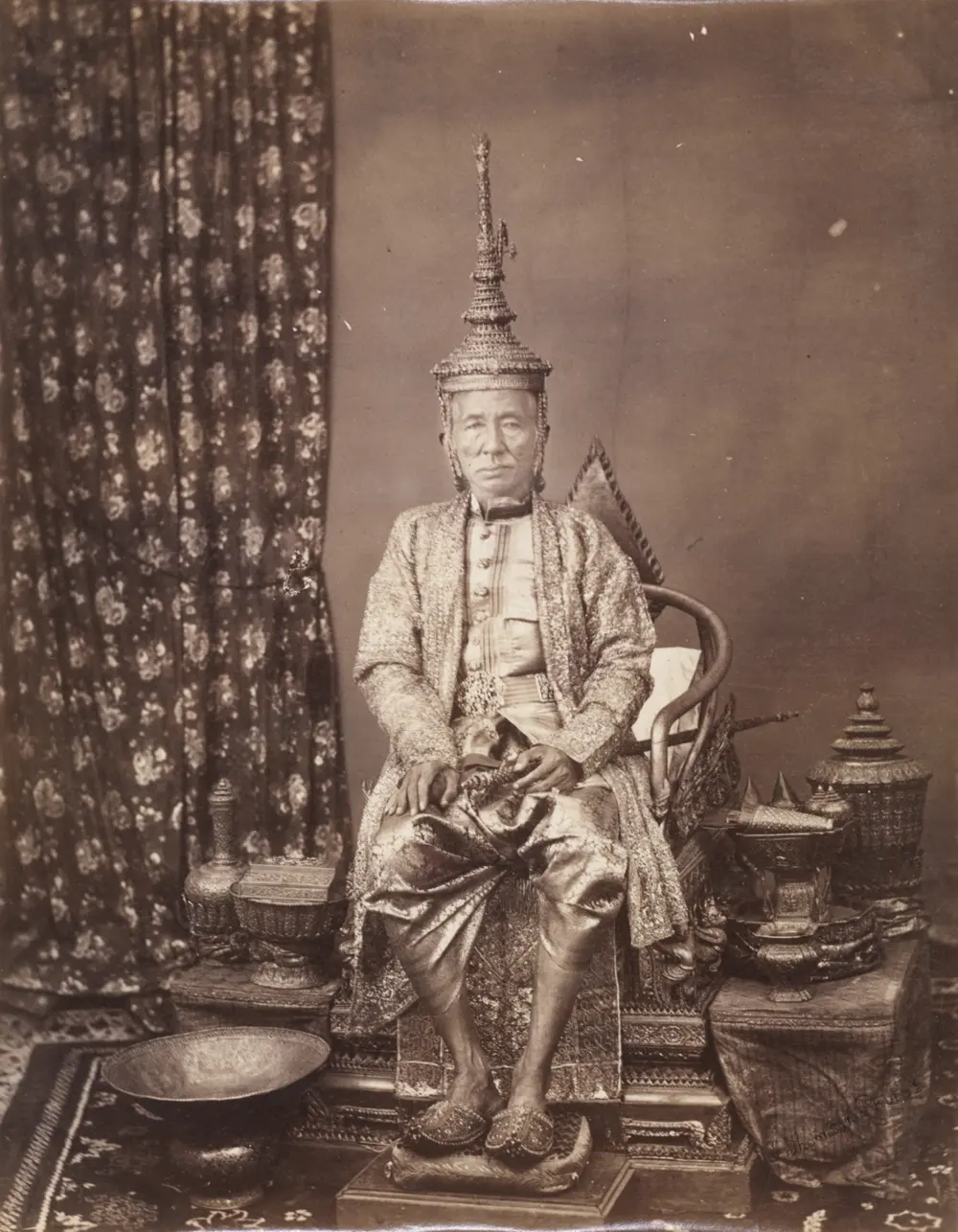
King Mongkut in royal regalia, photographed by John Thomson in 1865

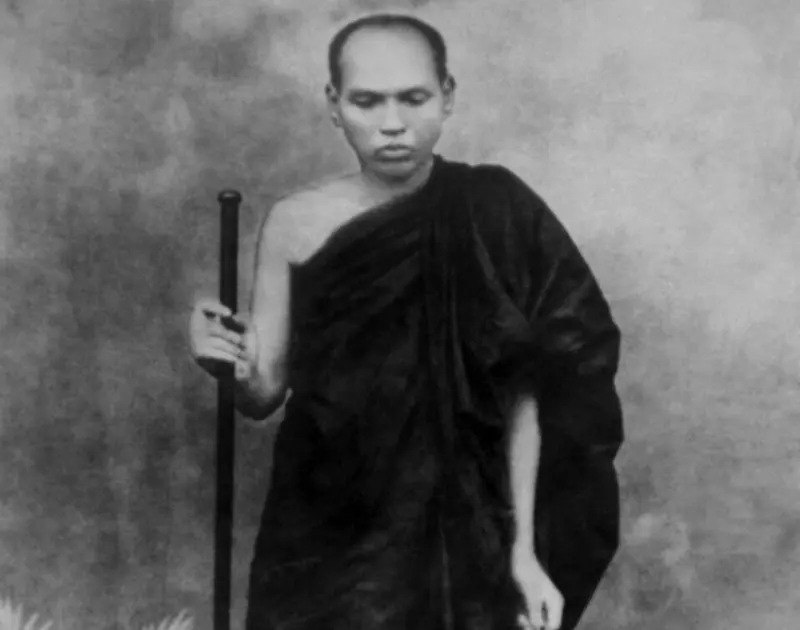
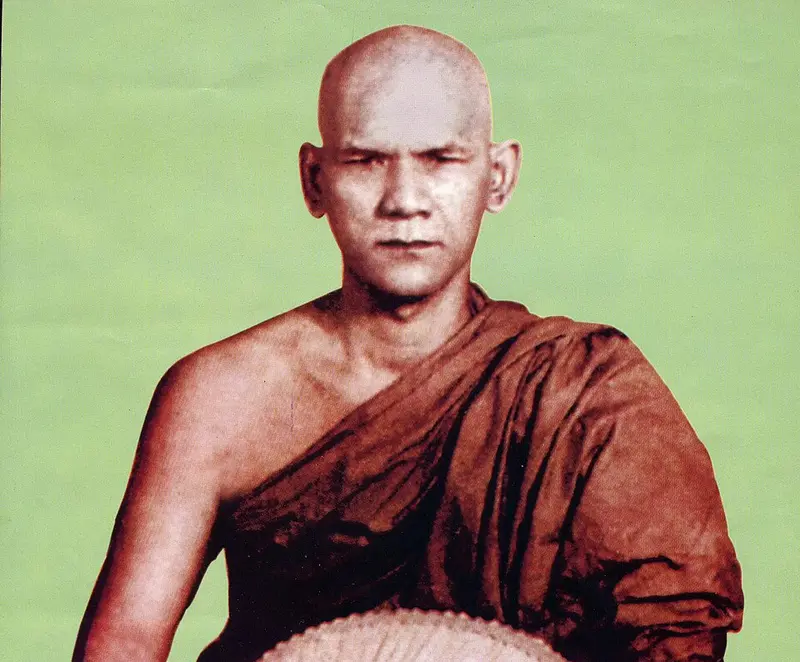
King Mongkut (1804–1868), Rama IV of Siam, lived 27 years as the Buddhist monk Vajirañāṇo before he became king in 1851. As a monk he studied the Pali scriptures, restored strict monastic discipline and founded the reform that became the Dhammayuttika order, which still runs from Wat Bowonniwet in Bangkok.

Why he matters

Back to the Pali

He learned Pali until he could read, speak and write it, and sifted the Buddha’s teaching from the customs that had grown around it.

A new order

The strict discipline he restored became the Dhammayuttika order, one of the two orders of Thai monks to this day.

Reason and the sky

He studied astronomy with the same care as the scriptures, and predicted the solar eclipse of 18 August 1868 well in advance.

His life

From the palace to the monastery and back, by way of Pali, stone inscriptions and the stars. Scroll, and walk it with him.

  1. 1804

    Born on Thursday, 18 October, a son of Prince Itsarasunthon, the future King Rama II, and Princess Bunrot. As a prince of the highest rank he studies Pali from boyhood.

  2. 1824

    Ordained as a monk at twenty, with the name Vajirañāṇo. Within weeks his father dies, and the court chooses his elder half-brother as King Rama III. He stays in the robes.

  3. First years

    Studies meditation, then the scriptures, in Bangkok monasteries, and passes the state Pali examinations with distinction.

  4. Reform

    Disappointed by how loosely the discipline is kept, he takes the stricter Mon lineage of ordination as his model and is ordained again. Monks who follow him form the core of a new order.

  5. 1833

    On a pilgrimage to the ruins of Sukhothai he finds a square stone stele inscribed in early Thai script, now known as the Ramkhamhaeng inscription, and brings it back to Bangkok.

  6. 1836

    Becomes the first abbot of Wat Bowonniwet in Bangkok, which grows into the centre of the new Dhammayut order. He studies Latin with Bishop Pallegoix and English with the missionary Jesse Caswell.

  7. 1851

    Rama III dies. After 27 years as a monk, Vajirañāṇo leaves the robes and is crowned King of Siam.

  8. 1868

    Watches the solar eclipse he predicted, at Wa Ko on 18 August, and falls ill with malaria on the journey. He dies on 1 October, a Thursday, like the day he was born.

What he taught

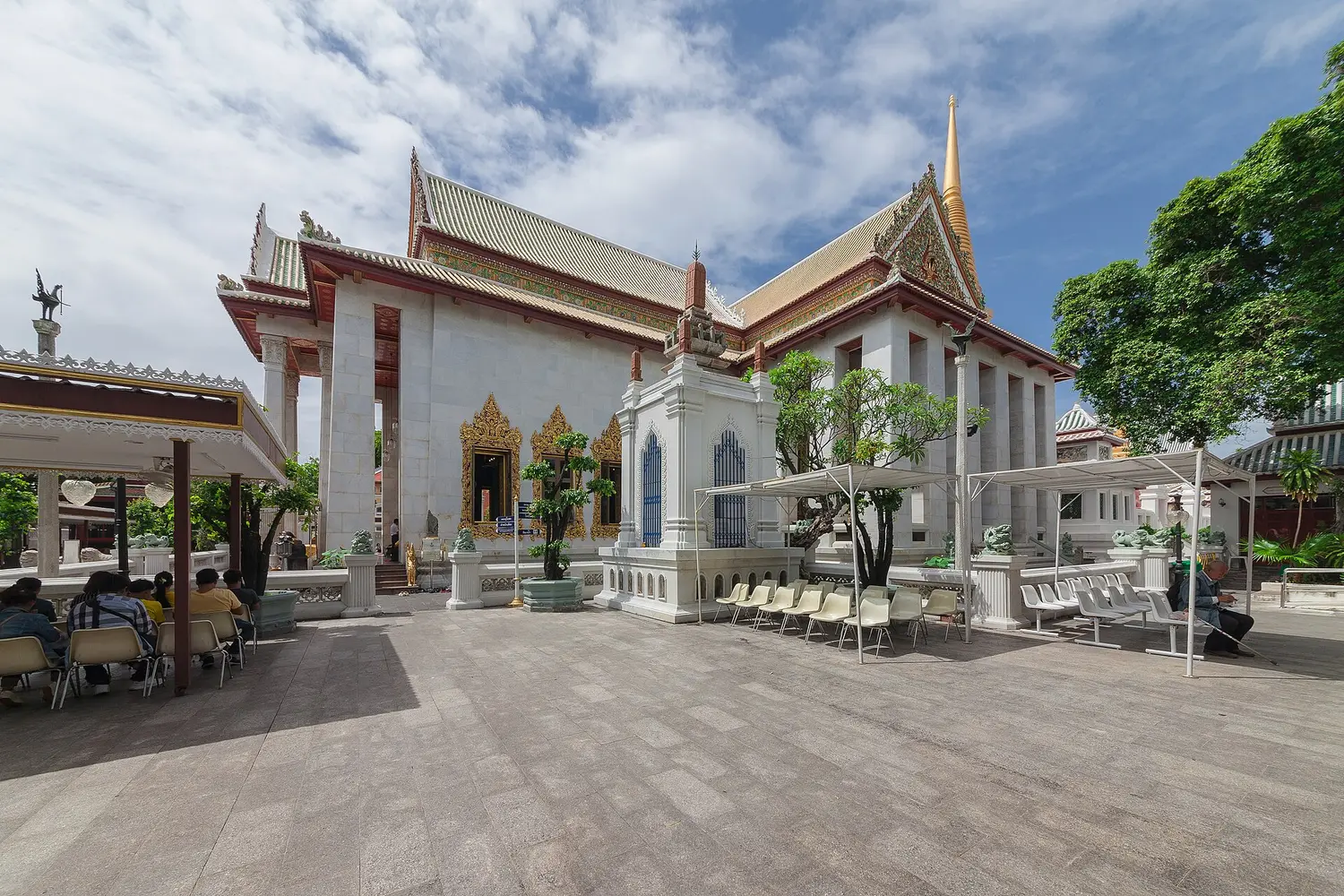
The ordination hall of Wat Bowonniwet in Bangkok, where he was abbot
Teaching 01 · Breath

Back to the texts

The Buddha’s words were passed on by memory for centuries before they were written down, then copied by hand for two thousand years. He read them in Pali, critically, to find what the Buddha had actually taught.

Monks in his monastery had to learn what their Pali chants meant. He composed new chants himself, and even a new script for writing Pali, the Ariyaka script.

From His Majesty King Mongkut’s Works and Achievements, nomination text for the UNESCO bicentenary, 2004

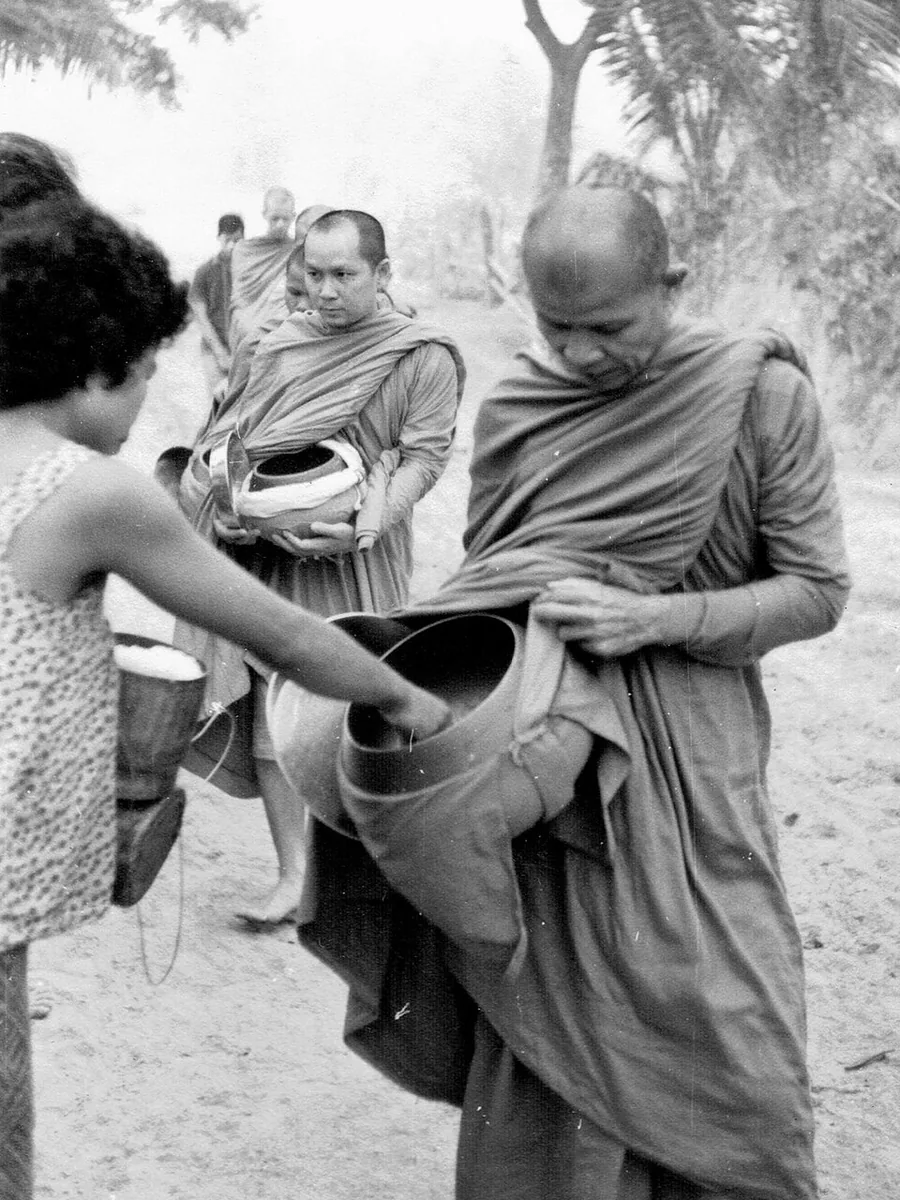
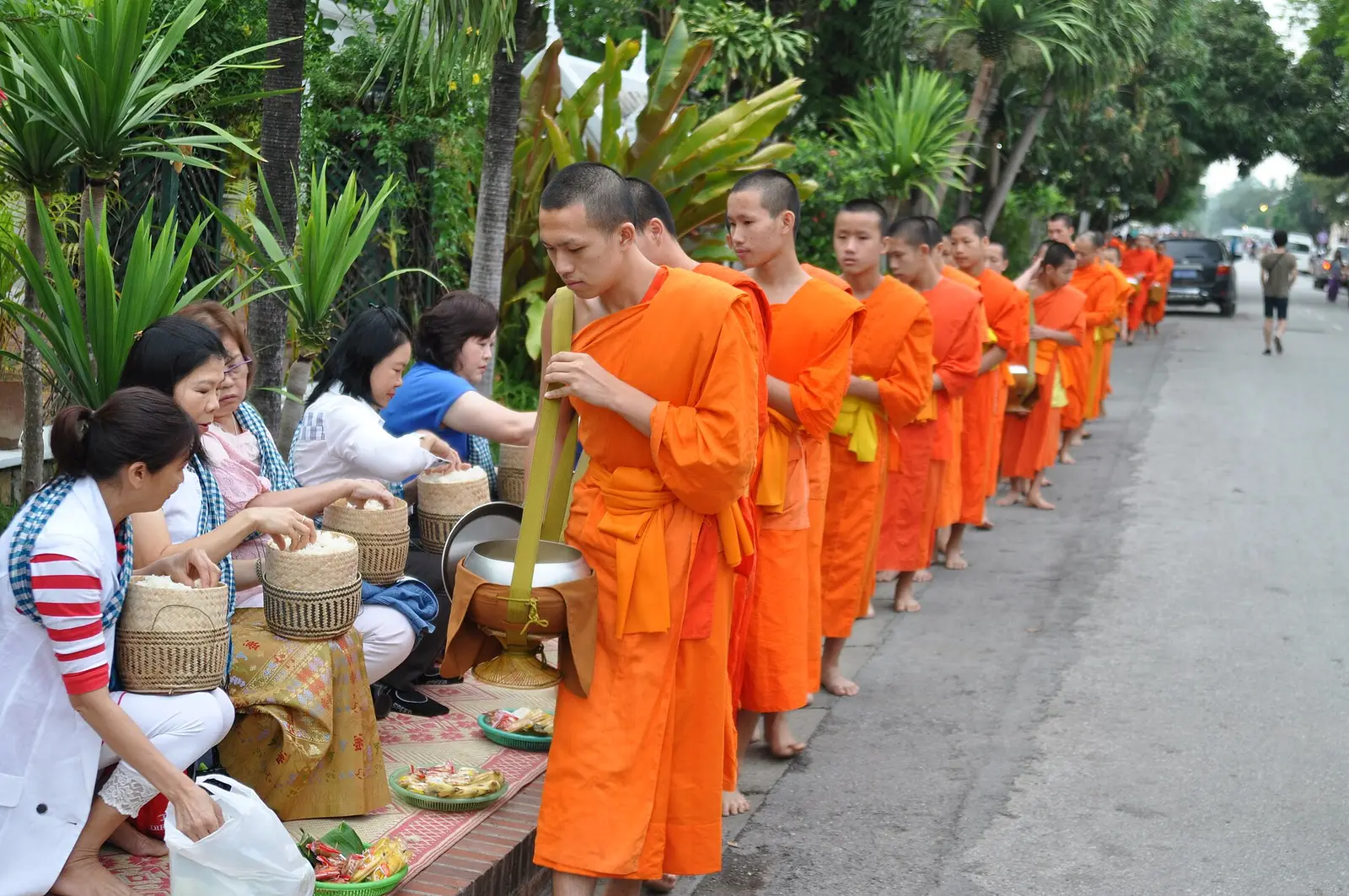
Monks in a line on the morning alms round in Thailand
Teaching 02 · Movement

The discipline

As a prince he had lived in luxury. As the monk Vajirañāṇo he walked barefoot on the alms round every morning and ate nothing from noon until dawn, for 27 years.

He asked the same of the monks around him, and the Dhammayut order grew out of that strictness.

From His Majesty King Mongkut’s Works and Achievements, nomination text for the UNESCO bicentenary, 2004
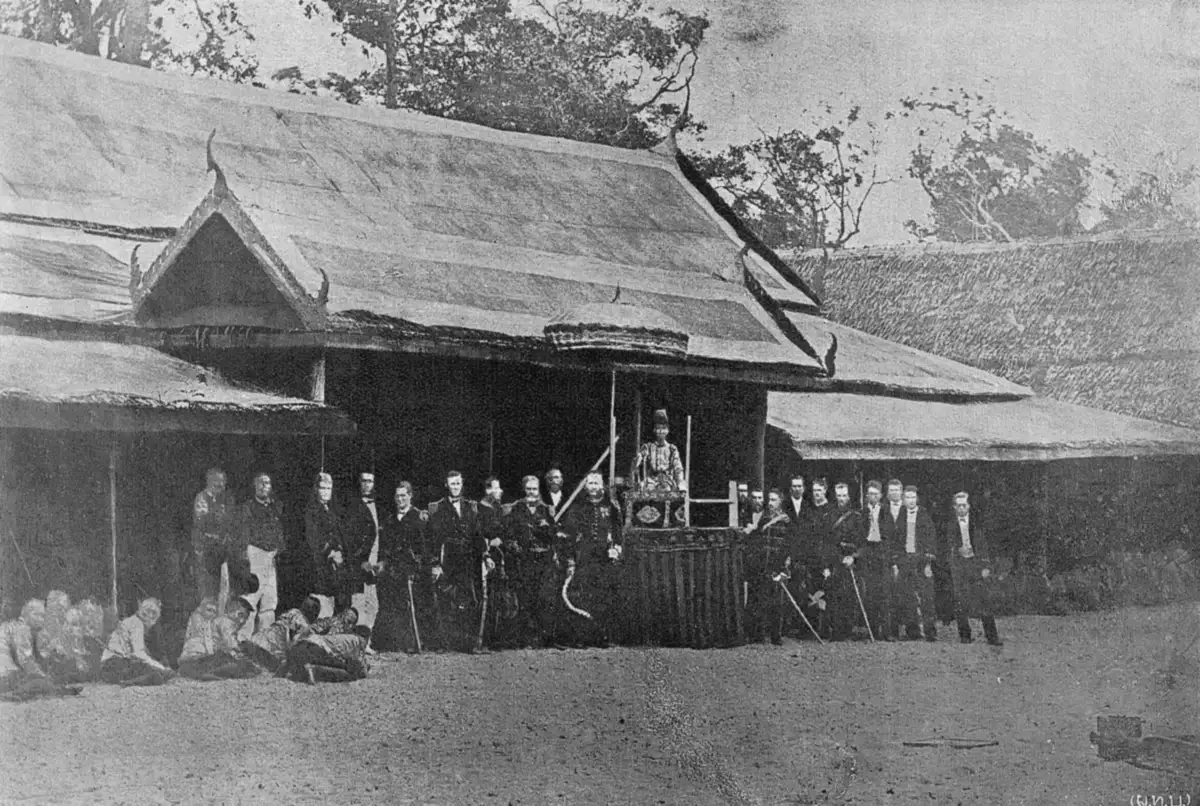
King Mongkut and his guests in front of the pavilion at Wa Ko, at the eclipse of 18 August 1868
Teaching 03 · Stillness

Reading the sky

He trusted what astronomy could measure, studied it with Western books, and ordered instruments from abroad.

In 1868 he took his court and foreign guests to Wa Ko, south of Hua Hin, to watch the total eclipse he had calculated. The sky went dark as he had said it would.

From the King Mongkut Studies Project, KMUTT, and the Science History Institute

And two more
Teaching 04

Every faith its own way

As abbot he let a missionary friend preach in a room of his monastery. As king he held that, since no one can be sure of the life to come, everyone should be free to prepare for it in their own way.

From His Majesty King Mongkut’s Works and Achievements, nomination text for the UNESCO bicentenary, 2004
Teaching 05

The past in stone

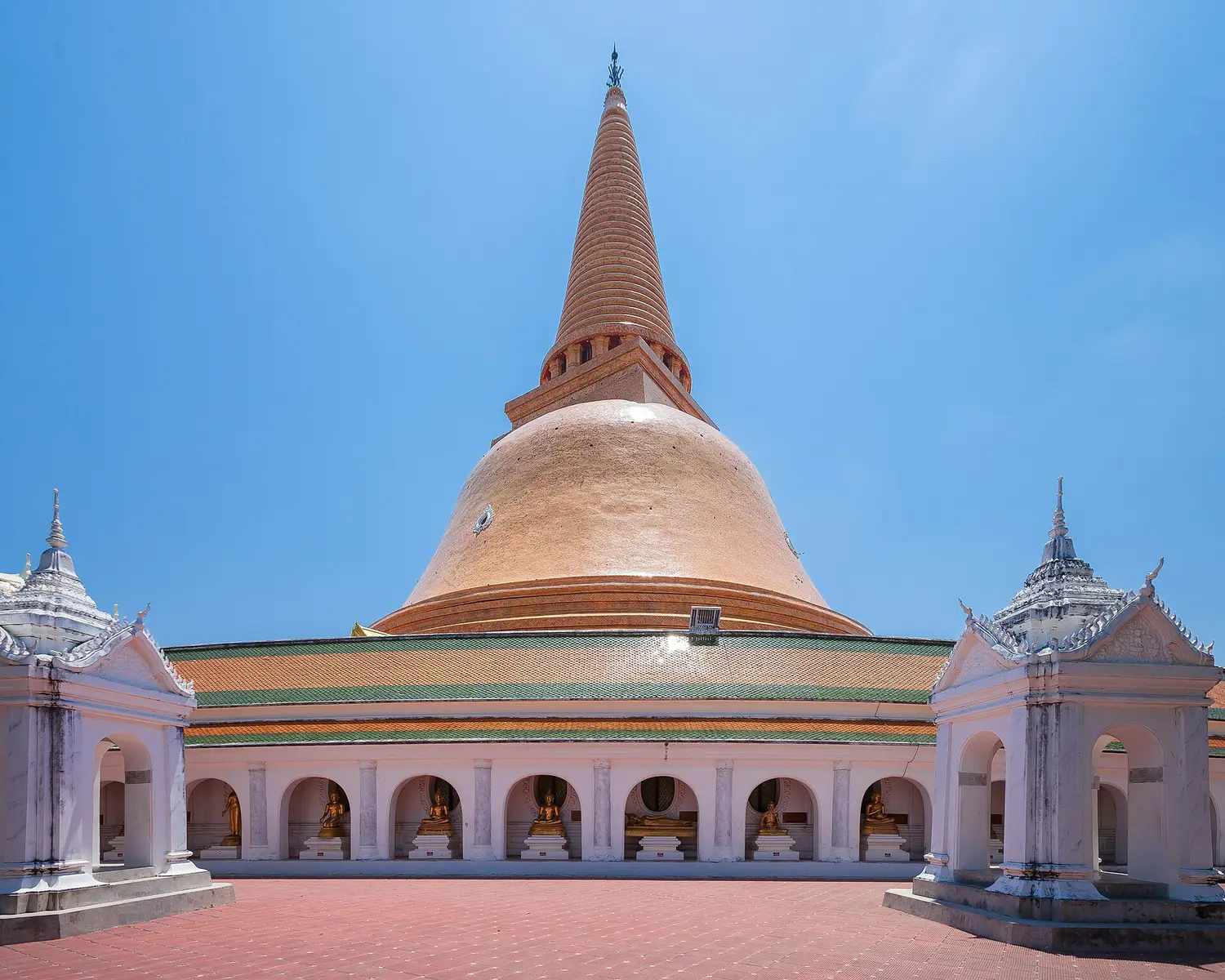
He found the great ruined stupa of Nakhon Pathom on a pilgrimage in 1831, and as king had it covered by the new Phra Pathom Chedi, leaving the old one standing inside.

From His Majesty King Mongkut’s Works and Achievements, nomination text for the UNESCO bicentenary, 2004
His body suffered, he wrote at the end, but his mind did not: this was how he practised the Buddha’s teaching.

Retold from his last letter, dictated in Pali (UNESCO nomination text, 2004)
For your week · Breath

This week, before you believe something you read about practice, test it once in your own training and see what it does.

His day

King Mongkut was born on 18 October 1804, a Thursday. Here is that day, read by the same calculator as yours. The lunar year of a birth before 1900 is beyond our calculator, so it stays out.

พฤหัสบดี Thailand · Thursday · Orange

Meditation

Seated, hands resting in the lap.

ကြာသပတေး Myanmar · Thursday

Rat

Jupiter · West

Read your own day

Where it happened
  • BangkokHis ordination in 1824 and his first years of study.
  • SukhothaiThe pilgrimage of 1833 and the inscribed stone.
  • Nakhon PathomThe ruined stupa he found in 1831, now inside Phra Pathom Chedi.
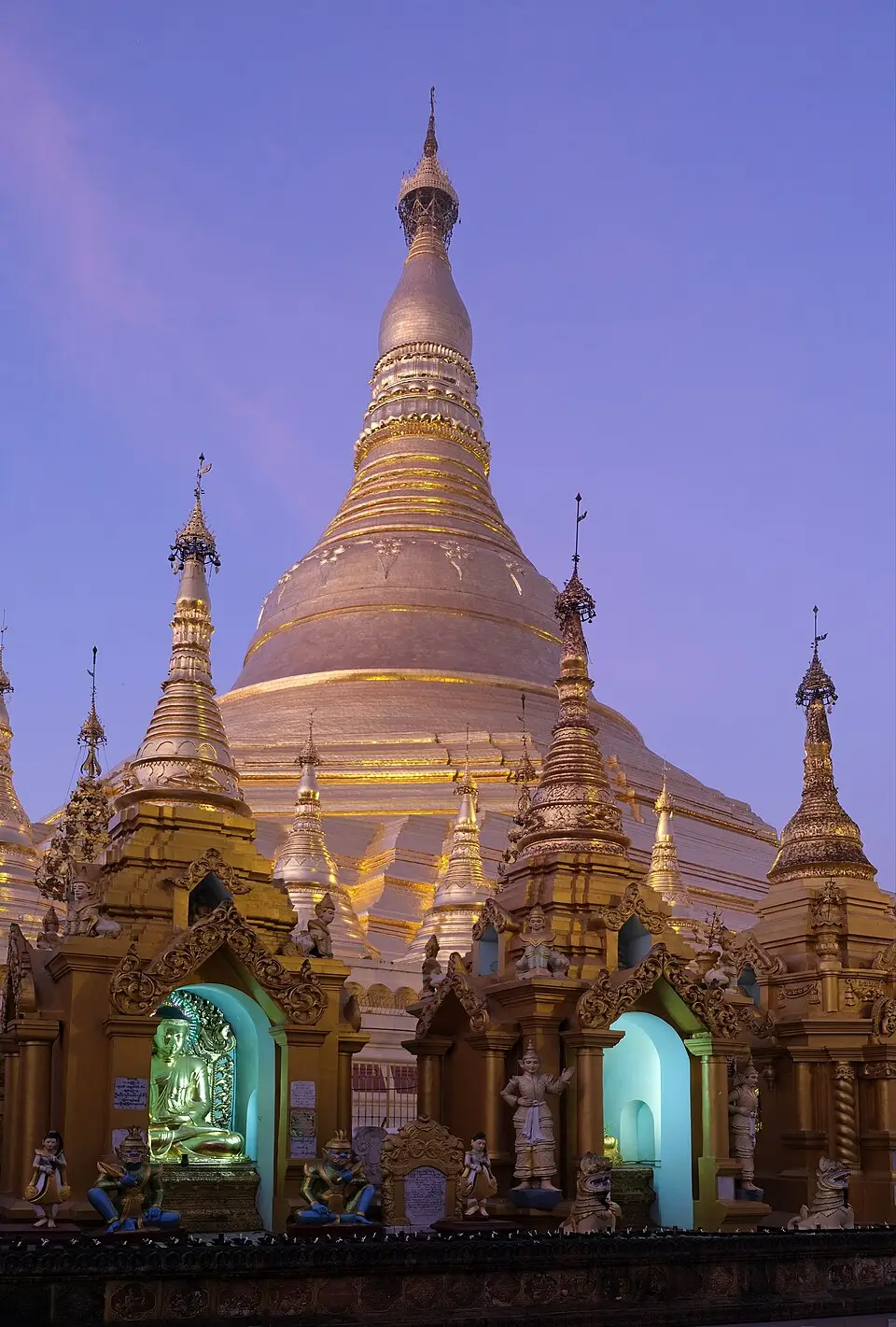
  • Wat Bowonniwet, BangkokHis monastery from 1836, centre of the Dhammayut order.
  • Wa Ko, Prachuap Khiri KhanThe eclipse of 18 August 1868.
Phra Pathom Chedi in Nakhon Pathom, built by King Mongkut over an ancient stupa
What remains

The Dhammayuttika order he began still has its centre at Wat Bowonniwet, and its monks keep the strict discipline he restored. Over the stupa he found at Nakhon Pathom rises Phra Pathom Chedi, among the tallest stupas in the world.

Next teacher Ajahn Maha Bua Back to · Phra Prajam Wan Thailand