










Tibet · The path behind it

Milarepa

མི་ལ་རས་པ Jetsün Milarepa · Mila the Cotton-clad · traditionally 1052–1135

A young man who used black magic for revenge, then spent the rest of his life in caves, living on nettles and singing what he found.

Vajrayana · Kagyu

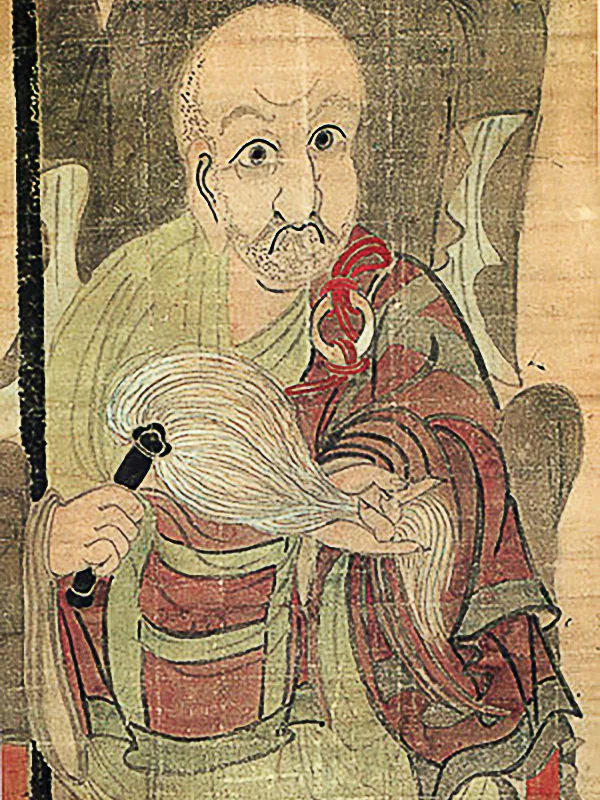
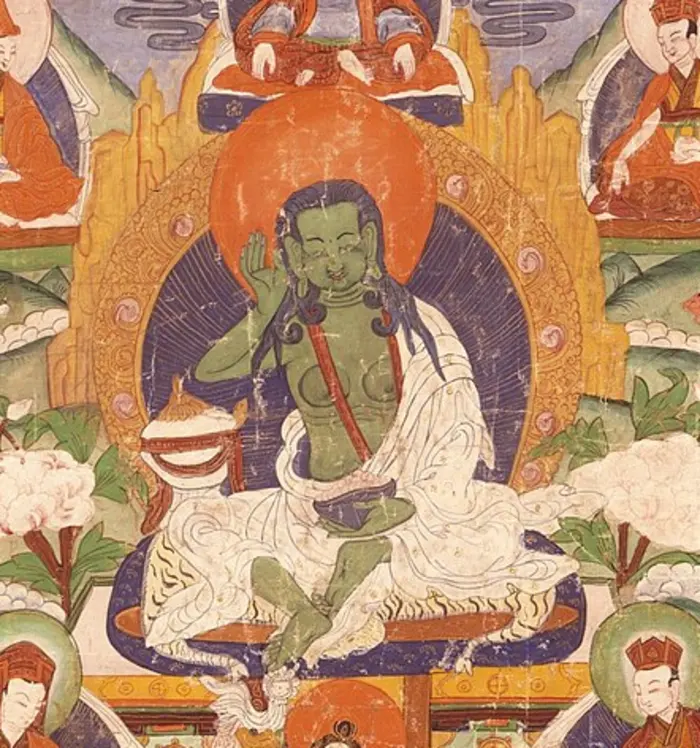
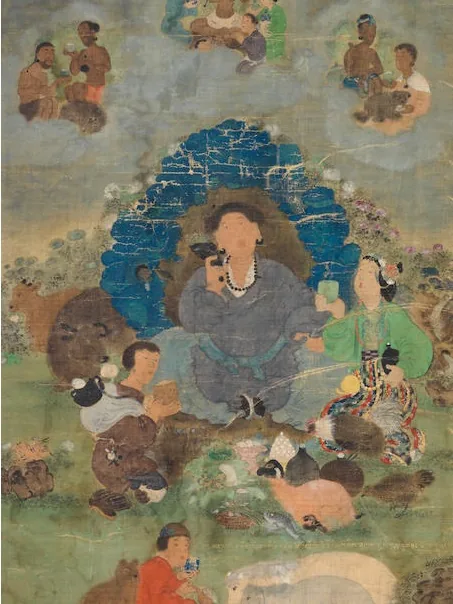
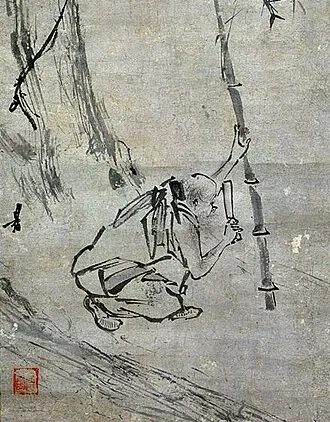
Milarepa, green from his diet of nettles, with his hand to his ear as he sings, in a Tibetan painting at LACMA

Milarepa (traditionally 1052–1135) is the most beloved yogi and poet of Tibet. In the life story told by his tradition, he turned from sorcery to the teacher Marpa, endured years of hard trials, and then meditated alone in mountain caves. His disciple Gampopa founded the monastic Kagyu school, and his songs are still sung.

Why he matters

From darkness to light

His life is the great Tibetan story of change: a man who did terrible harm and still reached awakening through practice.

Songs of realisation

He taught in songs, sung on the spot to whoever came. The Hundred Thousand Songs are still read and sung across Tibet.

The Kagyu line

Between his teacher Marpa and his disciple Gampopa, he is the link at the heart of the Kagyu school.

His life

The life as his tradition tells it, in the Jetsün Kahbum. Very little is known of him as a historical person. Scroll, and walk it with him.

  1. Childhood

    Born to a prosperous family in western Tibet. When his father dies, his uncle and aunt take the family’s wealth and leave mother and children poor.

  2. Sorcery

    At his mother’s urging he learns black magic. By its power, the story says, he kills thirty five of his enemies and destroys the harvest of the others with hail.

  3. Remorse

    Overcome by what he has done, he looks for a teacher of the Dharma and is sent to Marpa the Translator in Lhobrak.

  4. Lhobrak

    Marpa makes him build towers alone, stone by stone, and pull them down again, for years, before he gives him any teaching.

  5. The caves

    After Marpa’s instruction he meditates alone in mountain caves, living on nettle broth until his body turns green.

  6. Teaching

    He wanders and sings his teaching. Disciples gather, among them Rechungpa and the monk Gampopa.

  7. Chubar

    Dies at Chubar. His tradition gives 1135; other sources give 1123.

What he taught

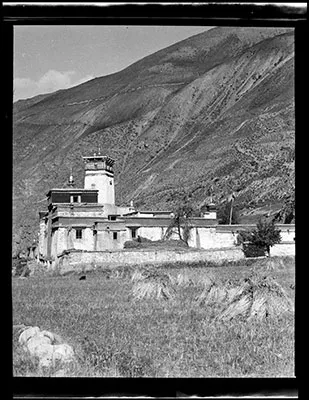
The tower of Sekhar Gutok in Lhobrak, which tradition says Milarepa built
Teaching 01 · Breath

The towers

Marpa refused him teaching and set him to build, alone, with his bare hands. When a tower was finished, Marpa had him tear it down.

Tibetans read it as the purification of the harm he had done, and as a lesson in trust.

From Tibet’s Great Yogī Milarepa, the Jetsün Kahbum, tr. Lama Kazi Dawa-Samdup, ed. W. Y. Evans-Wentz, 1928

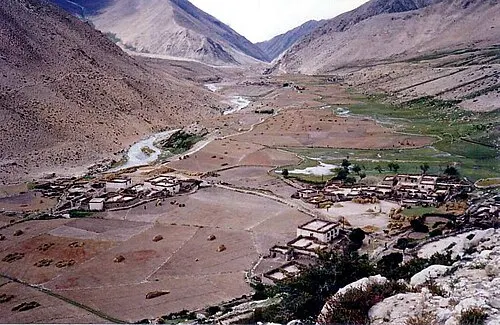
The valley below Milarepa’s Cave near Nyalam, in Tibet
Teaching 02 · Movement

Nettles

In the caves he had almost nothing to eat. He lived on nettles, and kept practising.

Visitors who came to his cave hoping for food, the story goes, found nothing but nettles, and were moved to veneration.

“Living on nettle broth alone, I continued my meditations.”

Tibet’s Great Yogī Milarepa, the Jetsün Kahbum, tr. Lama Kazi Dawa-Samdup, ed. W. Y. Evans-Wentz, 1928
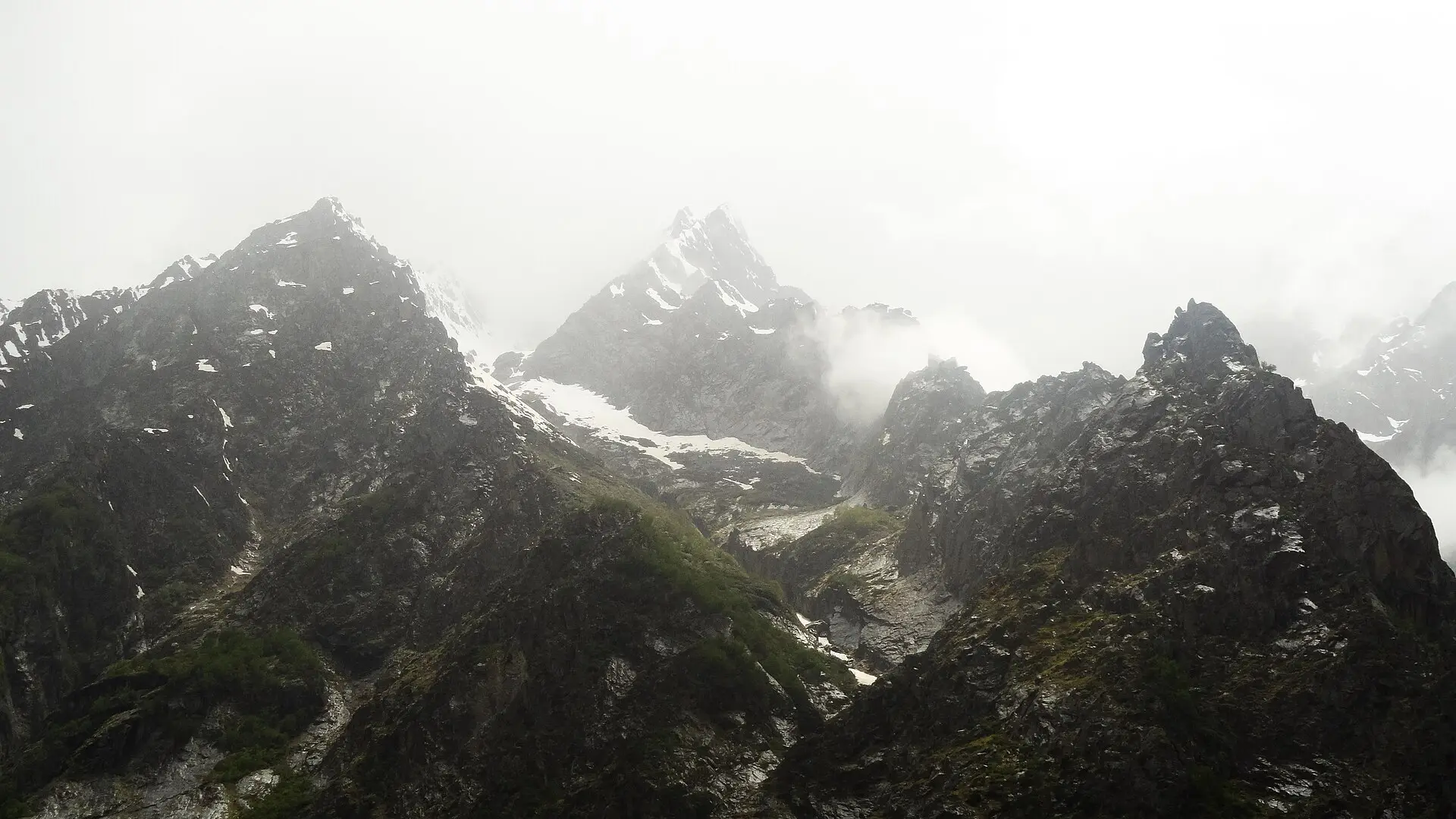
Snow peaks of the Himalaya
Teaching 03 · Stillness

Songs

When people questioned him, he answered in verse, often about the solitude and the mountains around him.

The songs carry hard teaching in a voice anyone could remember.

From Tibet’s Great Yogī Milarepa, the Jetsün Kahbum, tr. Lama Kazi Dawa-Samdup, ed. W. Y. Evans-Wentz, 1928; Wikipedia: Milarepa

And two more
Teaching 04

A story, not a record

His best known life was written by Tsangnyön Heruka in the 15th century, from older biographies. Scholars say very little is known about him as a historical person; the story is how Tibetans have understood practice ever since.

Wikipedia: Milarepa

Teaching 05

Nothing to steal

One night a man crept into his cave looking for wealth. Milarepa laughed out loud, and the thief laughed too, and went away.

“Try if thou canst find anything by night where I have failed by daylight.”

Tibet’s Great Yogī Milarepa, the Jetsün Kahbum, tr. Lama Kazi Dawa-Samdup, ed. W. Y. Evans-Wentz, 1928

I am Milarepa, great in fame, the direct offspring of Memory and Wisdom; yet an old man am I, forlorn and naked.

Milarepa · from his songs, in Tibet’s Great Yogī Milarepa, the Jetsün Kahbum, tr. Lama Kazi Dawa-Samdup, ed. W. Y. Evans-Wentz, 1928
For your week · Movement

This week, eat one simple meal with full attention, as if it were the only food you had.

Where it happened
  • Gungthang, western TibetHis home, in the story.
  • LhobrakHis teacher Marpa, and the towers.
  • Caves near NyalamOne of his places of meditation.
  • Mount KailashA mountain linked to him in his songs and legends.
  • ChubarWhere he died.
A Tibetan valley with houses and fields below Milarepa’s Cave
What remains

Through Gampopa his teaching became the Kagyu school, with its many branches. His life and songs are among the most loved works of Tibetan literature.

Read him yourself
  • Tibet’s Great Yogī Milarepa The 1928 translation of his life by Lama Kazi Dawa-Samdup. Public domain.
  • The Hundred Thousand Songs of Milarepa His songs; several modern translations exist.
Sources
Other teachers of Tibet
Next teacher Tsongkhapa Back to · Lo-khor and Mewa Tibet