






China · The path behind it

Kumārajīva

鳩摩羅什 Kumārajīva · Jiumoluoshi · 344 or 350 – 409 or 413

A prince’s son from an oasis city on the Silk Road, carried off as war booty, who gave China the words it still chants.

Mahayana · Madhyamaka translator

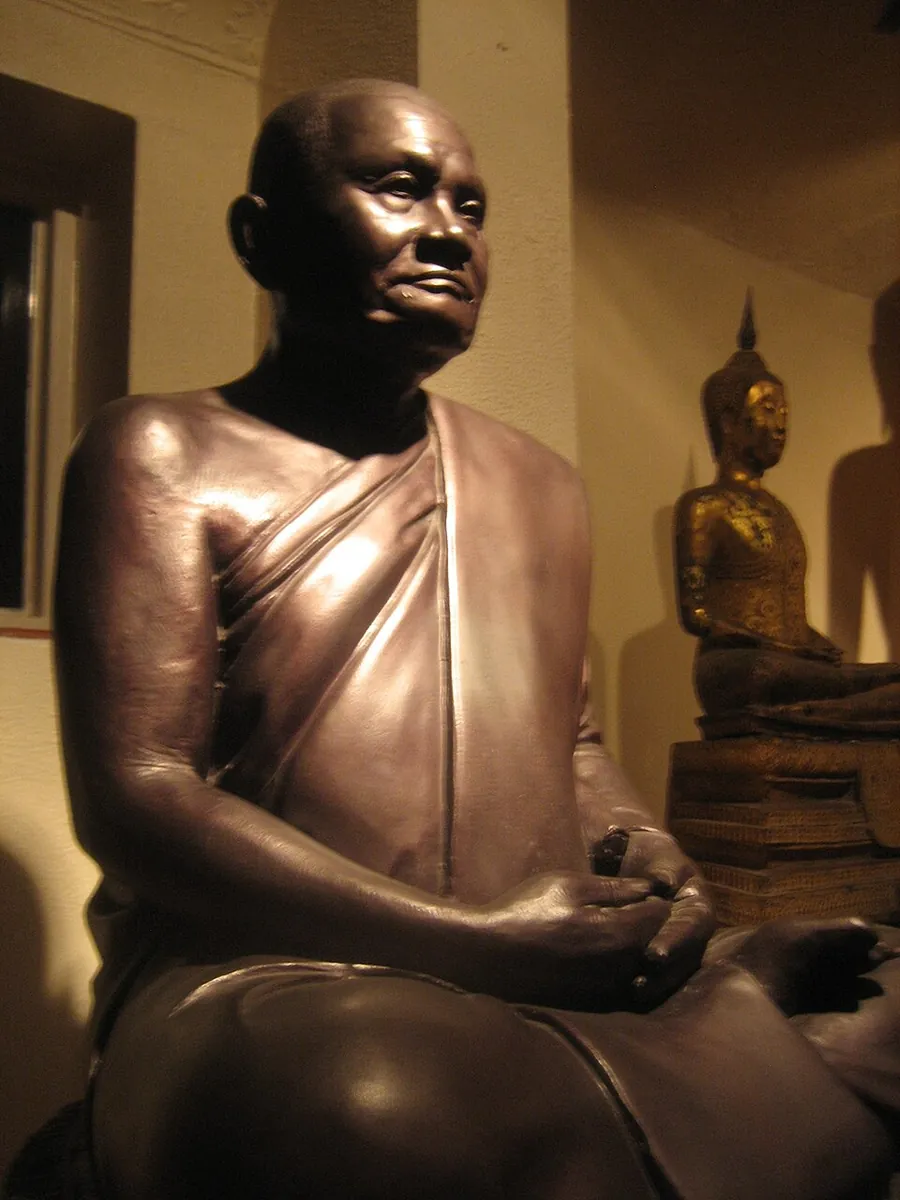
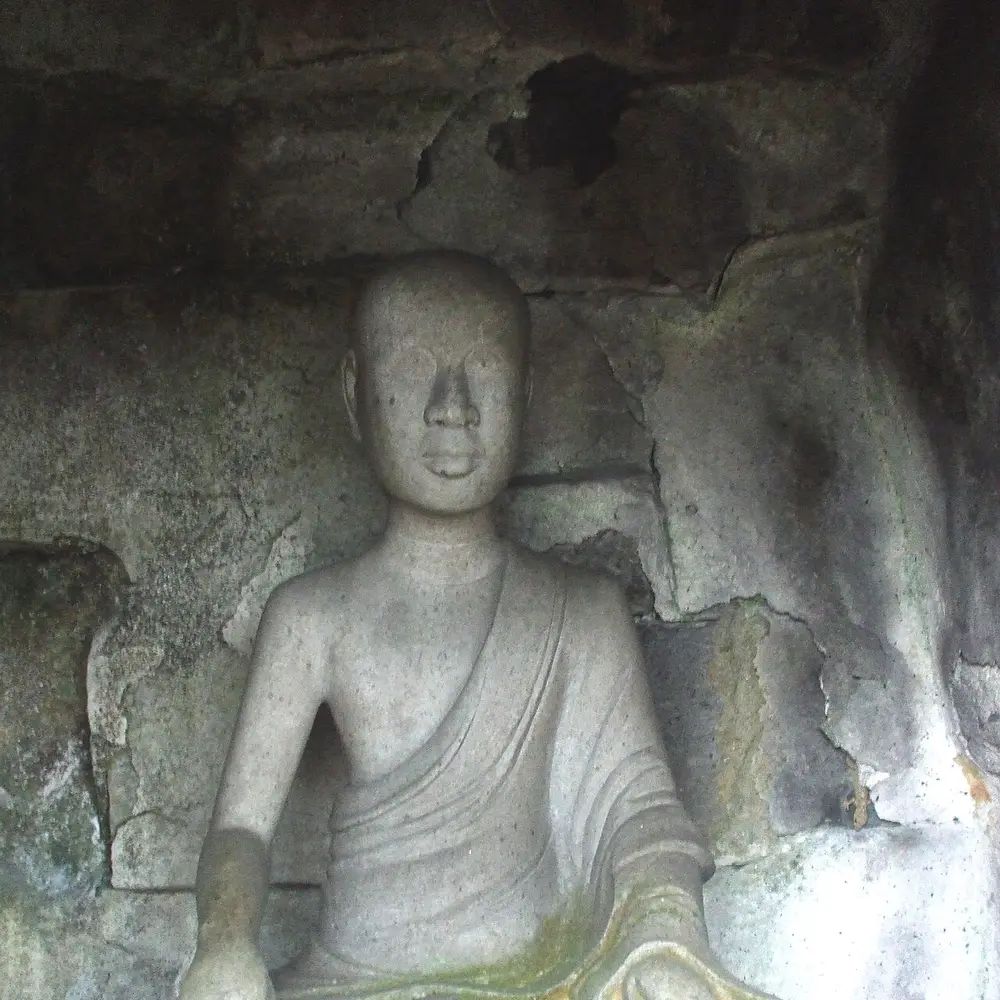
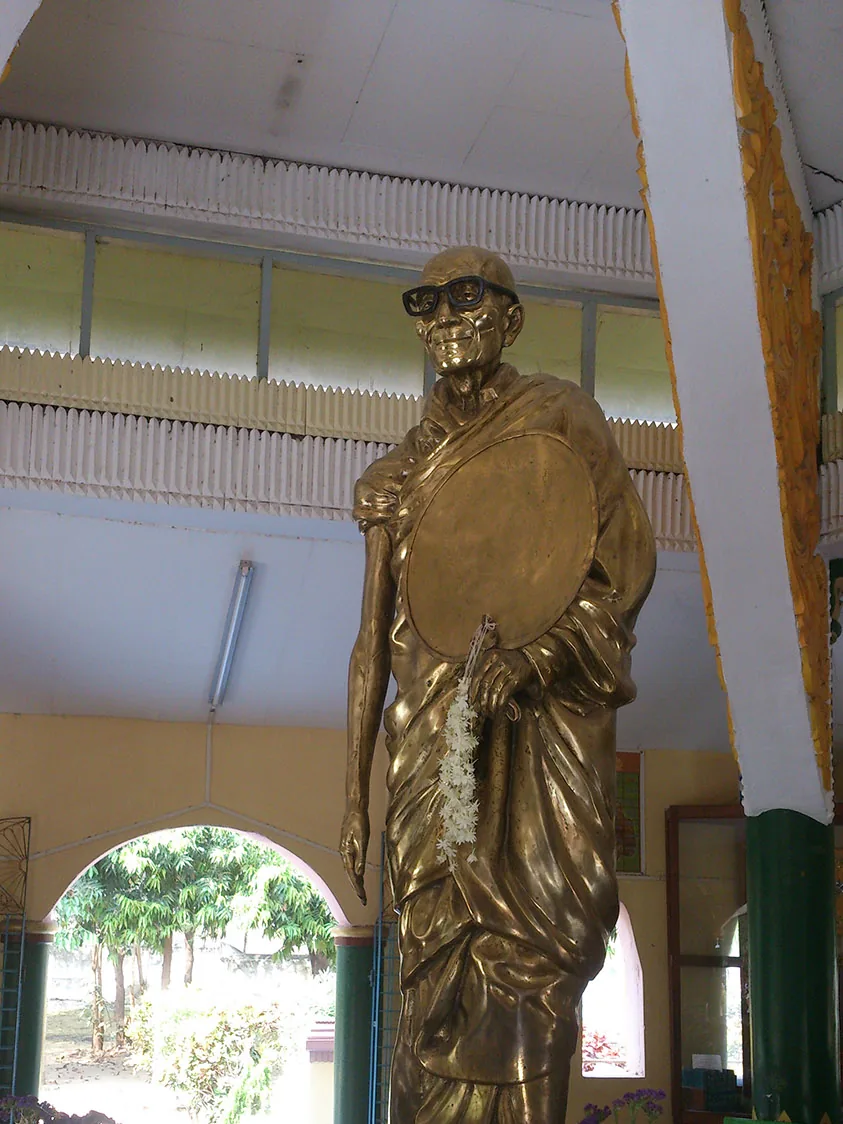
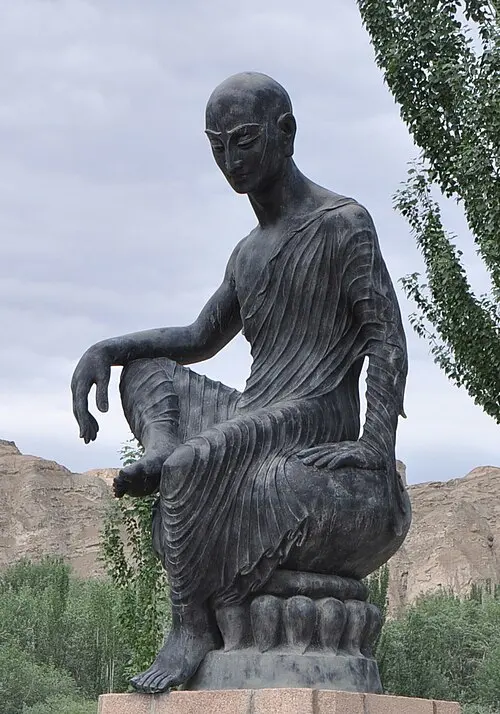
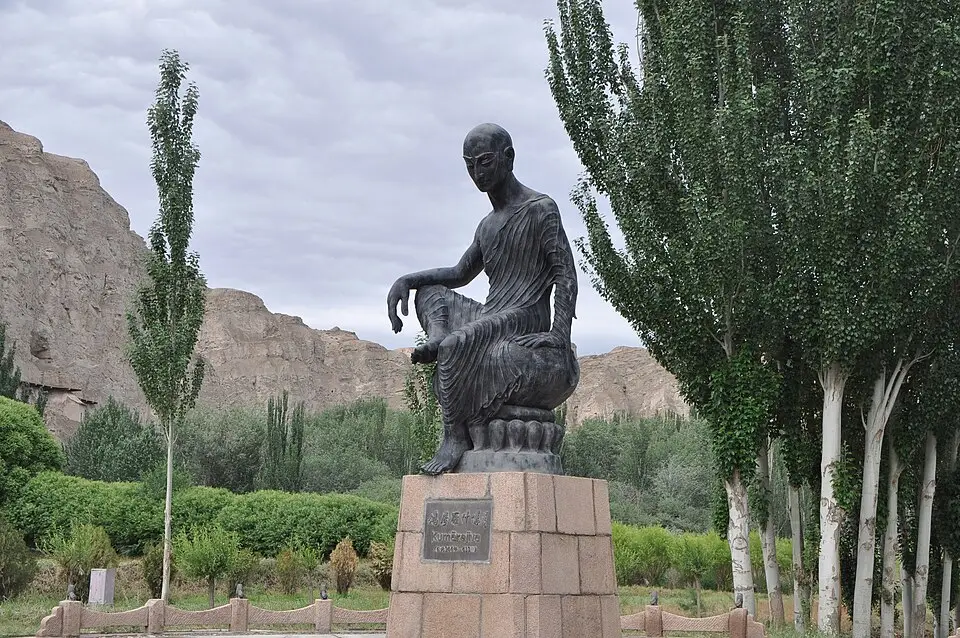
A modern statue of Kumārajīva seated in front of the Kizil caves near Kucha

Kumārajīva (died 409 or 413) was a Buddhist monk from Kucha on the Silk Road who became the greatest translator of Buddhist texts into Chinese. After seventeen years as a captive in Liangzhou, he reached Chang’an in 402 and, with a team of Chinese scholars, translated the Lotus, Diamond and Vimalakīrti sūtras in versions still used today.

Why he matters

The words still chanted

His translations of the Lotus Sūtra, the Diamond Sūtra and the Vimalakīrti Sūtra are still the versions used in Chinese Buddhism today.

The Middle Way in Chinese

He brought Nāgārjuna’s philosophy of emptiness to China in clear language, and answered the questions of Chinese masters such as Huiyuan in long letters.

A school of translators

At Chang’an he led thousands of disciples. His team, among them Sengzhao and Daosheng, shaped Chinese Buddhist thought for centuries.

His life

From the oasis city of Kucha to Kashmir, a captivity in the west, and the capital Chang’an. Scroll, and walk it with him.

  1. 344 or 350

    Born in Kucha, an oasis kingdom on the Silk Road, to a noble family; his mother is related to the ruling house. Sources give 344 or 350.

  2. Boyhood

    Studies in Kashmir, then at Kashgar turns from the older schools to the Mahāyāna.

  3. 384

    The Chinese general Lü Guang conquers Kucha and takes him away as a prize.

  4. Liangzhou

    Spends seventeen years in Liangzhou, in today’s Gansu, at the court Lü Guang founds there. Almost nothing is known of these years.

  5. 401

    The ruler Yao Xing conquers Liangzhou and summons him.

  6. 402

    Arrives at Chang’an early in the year and is honoured by the court. Thousands of disciples gather.

  7. Chang’an

    With his team he translates the great sūtras and treatises, and answers Huiyuan’s questions by letter.

  8. 409 or 413

    Dies at Chang’an. Erik Zürcher gives 409; other sources give 413.

What he taught

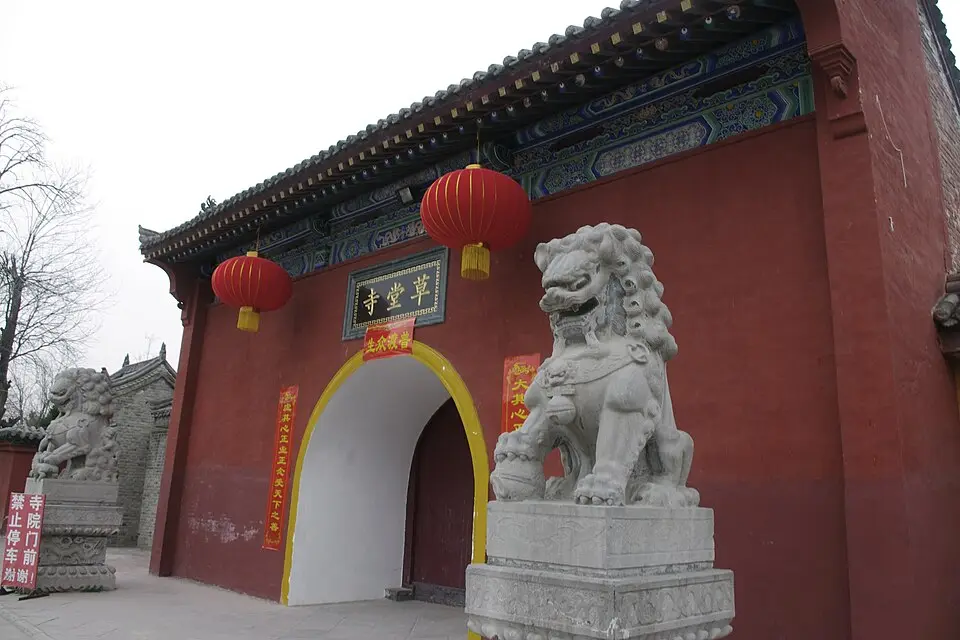
The red gate of Caotang temple near Xi’an, the old Chang’an
Teaching 01 · Breath

Translation

He did not work alone. At Chang’an he led a court-sponsored team of Chinese scholars, in daily sessions at the Xiaoyao Gardens.

Their style was known for its clarity, and it left behind the old habit of borrowing Daoist words for Buddhist ideas.

From Erik Zürcher, The Buddhist Conquest of China, Brill, 3rd ed. 2007; Wikipedia: Kumārajīva

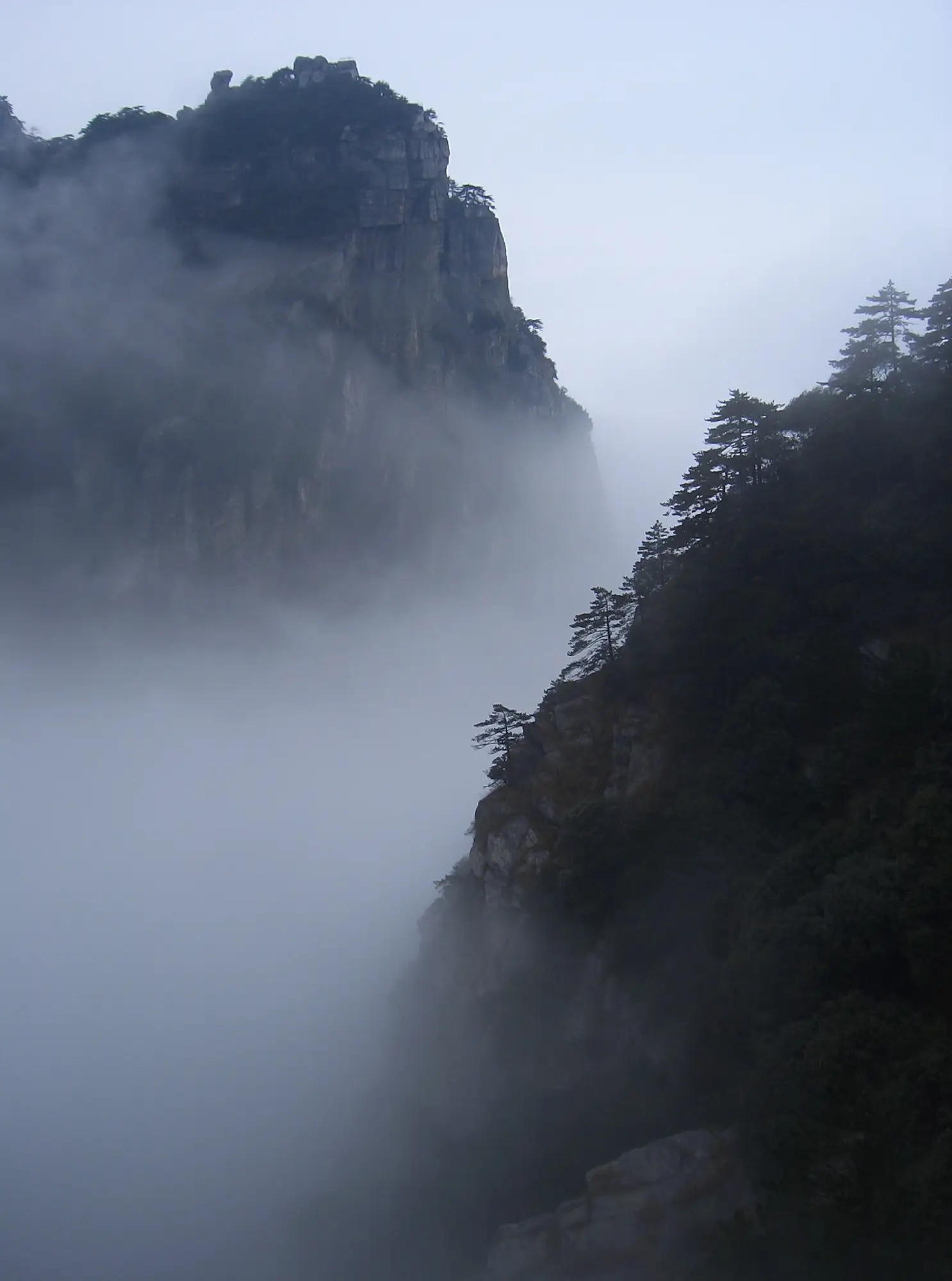
Fog on a mountain cliff
Teaching 02 · Movement

Emptiness

He was an orthodox follower of Nāgārjuna’s Middle Way: things have no fixed self-nature, and so they can arise and change.

His explanations, preserved in his letters, are among the clearest we have from his time.

From Erik Zürcher, The Buddhist Conquest of China, Brill, 3rd ed. 2007

The Kizil caves and his statue in the desert near Kucha
Teaching 03 · Stillness

Seventeen years

For seventeen years he was kept by a general who used his advice and mocked him.

When he finally reached Chang’an he was past fifty, and his great work was still ahead of him.

From Erik Zürcher, The Buddhist Conquest of China, Brill, 3rd ed. 2007

And two more
Teaching 04

Letters with Huiyuan

From Mount Lu, Huiyuan sent him questions on the body of the Buddha and the path of the bodhisattva. Their letters survive as one of the great documents of early Chinese Buddhism.

From Erik Zürcher, The Buddhist Conquest of China, Brill, 3rd ed. 2007

Teaching 05

Still in use

Sixteen centuries on, many of his translations are still the versions read in Chinese Buddhism, among them the Lotus, the Diamond and the Amitābha sūtras.

Wikipedia: Kumārajīva (cross-check)

一切有為法,如夢幻泡影,如露亦如電,應作如是觀。

Kumārajīva · his Chinese translation of the closing verse of the Diamond Sūtra: all conditioned things are like a dream, an illusion, a bubble, a shadow, like dew and lightning; see them so
For your week · Breath

This week, at the end of a hard session, look at the tiredness as it passes, like dew in the sun.

Where it happened
  • Kucha, Tarim BasinWhere he was born.
  • Kashmir and KashgarHis studies as a boy.
  • Liangzhou, GansuHis seventeen years of captivity.
  • Chang’an, today’s Xi’anHis translation work from 402, and his death.
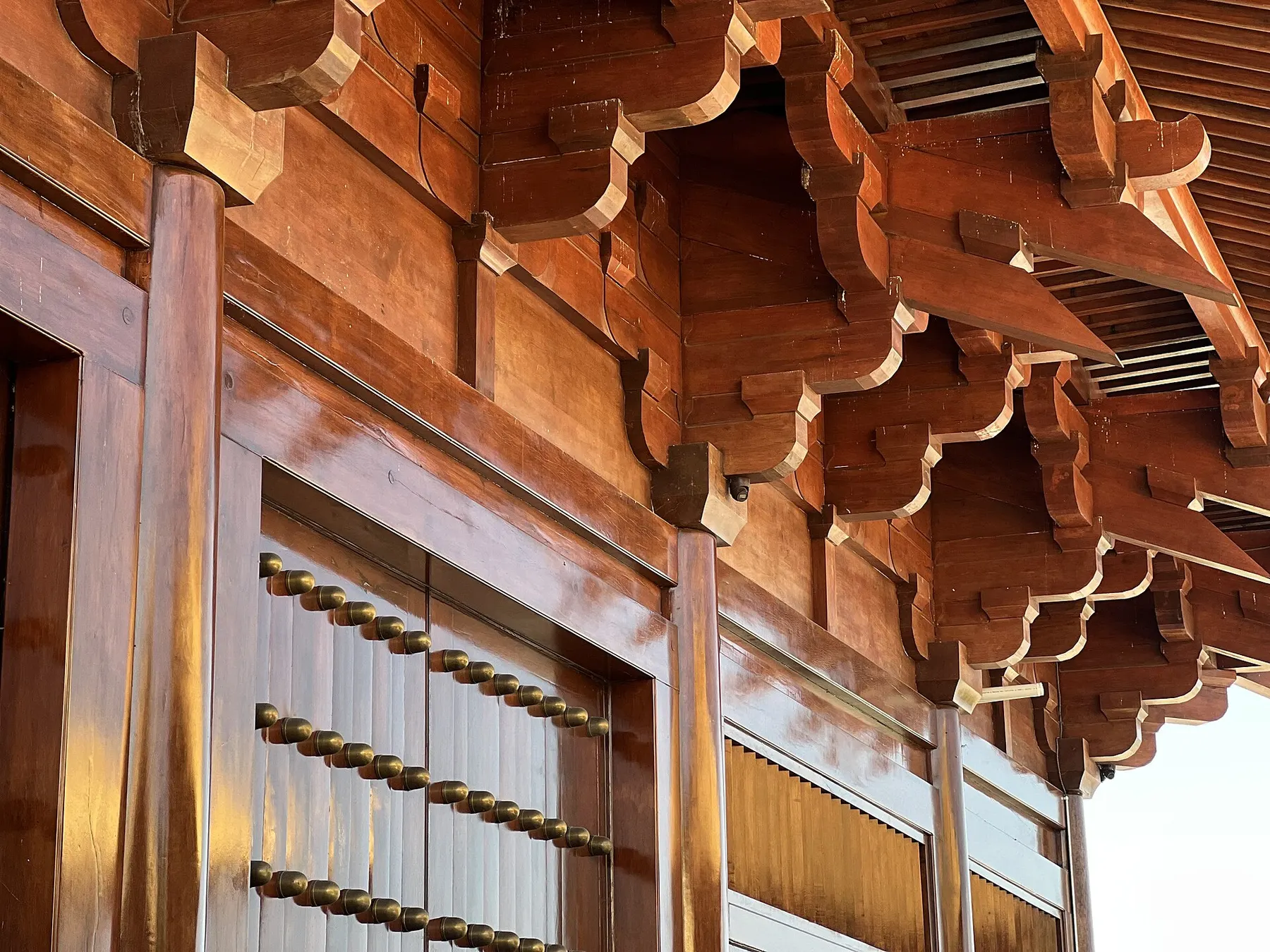
Carved wooden eaves of a Chinese Buddhist temple
What remains

Through the texts in Chinese he left, his work reached every Buddhist culture that reads Chinese scripture, and his translations are still in use today.

Read him yourself
  • The Buddhist Conquest of China Erik Zürcher’s classic history of early Chinese Buddhism.
  • The Diamond Sūtra In his Chinese translation, on Chinese Wikisource.
Sources
Other teachers of China
Next teacher Huiyuan Back to · Běnmìng Fó China