
Over three hundred works
His writings fill eighteen volumes: philosophy, ethics, tantra and the stages of the path.
From Tsongkhapa, Stanford Encyclopedia of Philosophy

ཙོང་ཁ་པ Lobsang Drakpa · Je Rinpoche · 1357–1419
A boy from the far northeast who walked thirteen hundred miles to study, and wrote the path in stages for all of Tibet.
Vajrayana · Gelug

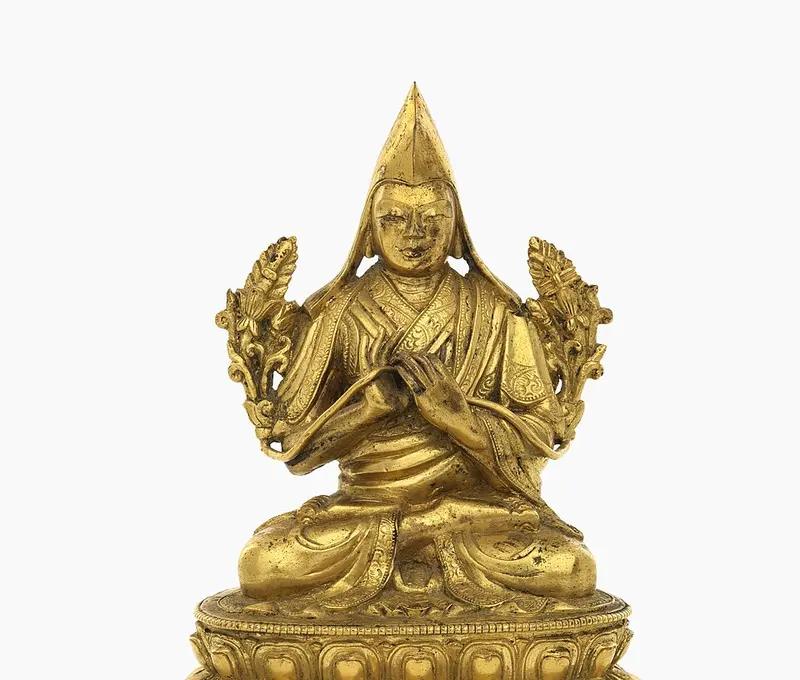
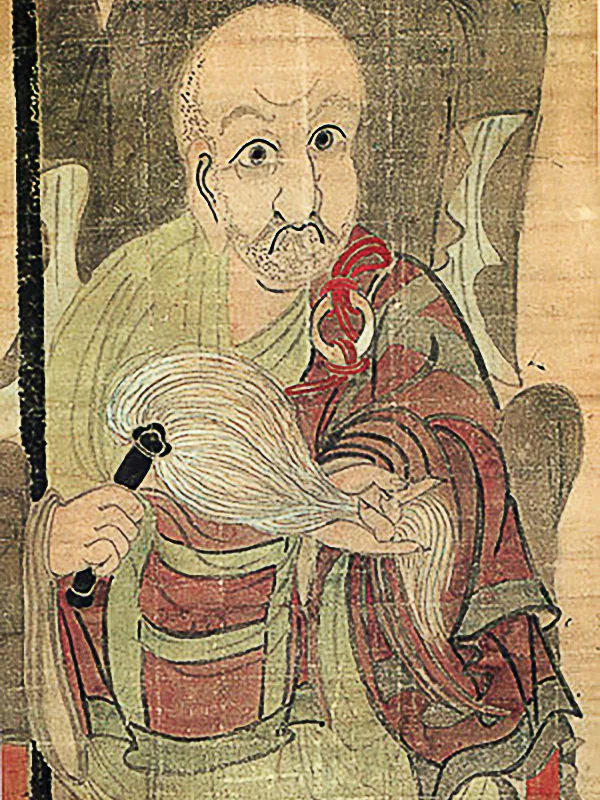
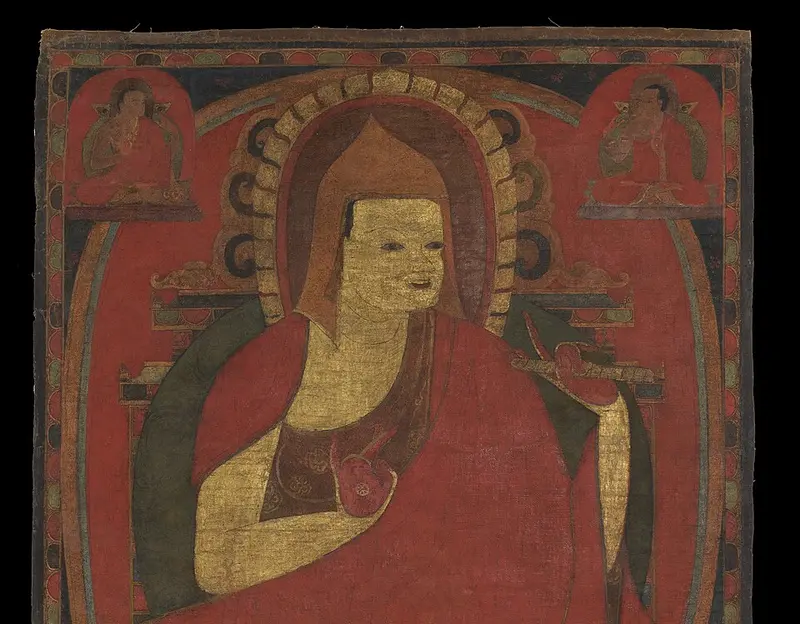
Tsongkhapa (1357–1419) was a Tibetan scholar, meditator and reformer, the founder of the Gelug school. Born in Tsongkha in Amdo, he studied across central Tibet, wrote the Great Treatise on the Stages of the Path to Enlightenment in 1402, began the great prayer festival of Lhasa and founded Ganden monastery in 1409.


His Great Treatise on the Stages of the Path to Enlightenment, finished in 1402, is one of the most studied books of Tibetan Buddhism.

He moved between years of study and years of retreat all his life, and insisted that reasoning and meditation support each other.

From Ganden, the monastery he founded, and from Drepung and Sera, founded by his students, grew the Gelug, the school of the Dalai Lamas. The first Dalai Lama, Gendün Drup, was his student.
From Tsongkha in the northeast to the monasteries of central Tibet, and to the mountain above Lhasa. Scroll, and walk it with him.
Born in Tsongkha, in the Amdo region of northeastern Tibet. As a small child he receives lay precepts from the Fourth Karmapa.
Moves to his tutor’s house at six and is ordained a novice the same year.
In his teens he travels some thirteen hundred miles to central Tibet, and never returns home.
Studies at the great monasteries of the time, Drikung, Nyethang, Sakya, and meets his main teacher, Rendawa.
Enters a strict solitary retreat, then passes his debates in the four great subjects and begins to teach.
Completes the Great Treatise on the Stages of the Path to Enlightenment, at forty six.
Renews the central temple of Lhasa, founds the great prayer festival, Monlam Chenmo, and founds Ganden monastery.
His students found Drepung and Sera, which with Ganden become the largest Gelug monasteries.
Dies, after giving his yellow hat to his disciple Gyaltsab Je as a sign of succession.

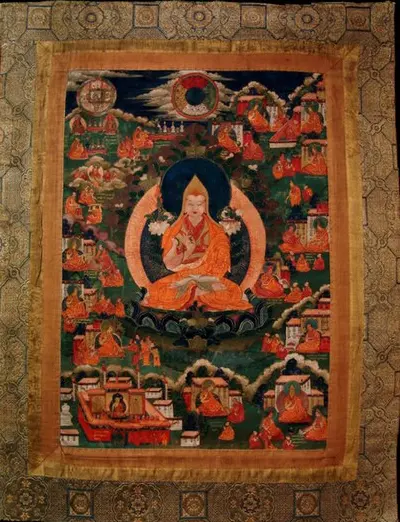

Things are empty of a fixed nature of their own, and for that very reason they arise in dependence on causes.
For him these were not two truths in tension but one insight, which keeps ethics and wisdom together.
From the Great Treatise, tr. Lamrim Chenmo Translation Committee, quoted in Tsongkhapa, Stanford Encyclopedia of Philosophy
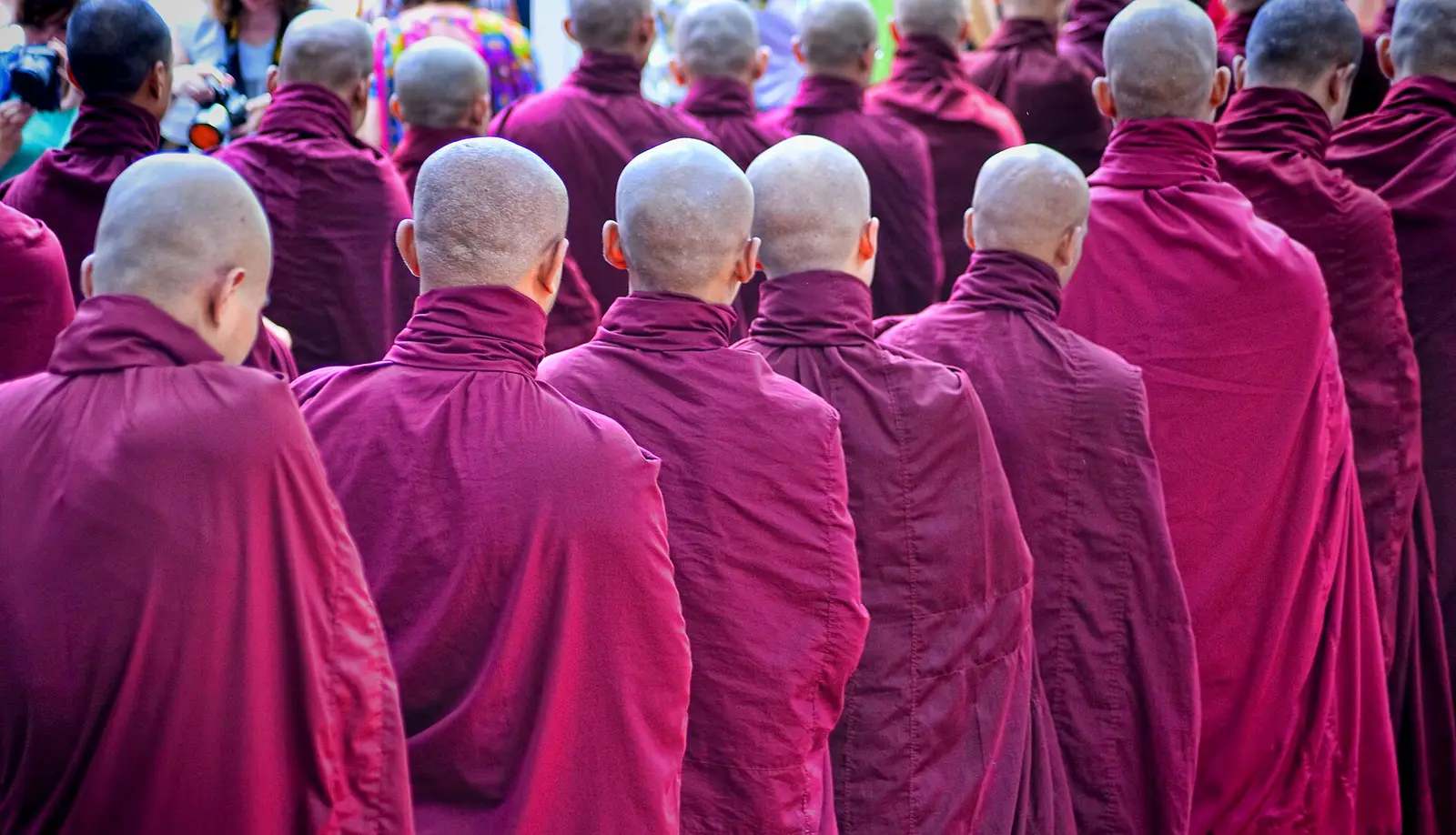

In 1409 he restored the central temple of Lhasa and began a prayer festival for the new year.
Monlam Chenmo, the Great Prayer, became one of the great gatherings of Tibetan Buddhism.
From Tsongkhapa, Stanford Encyclopedia of Philosophy
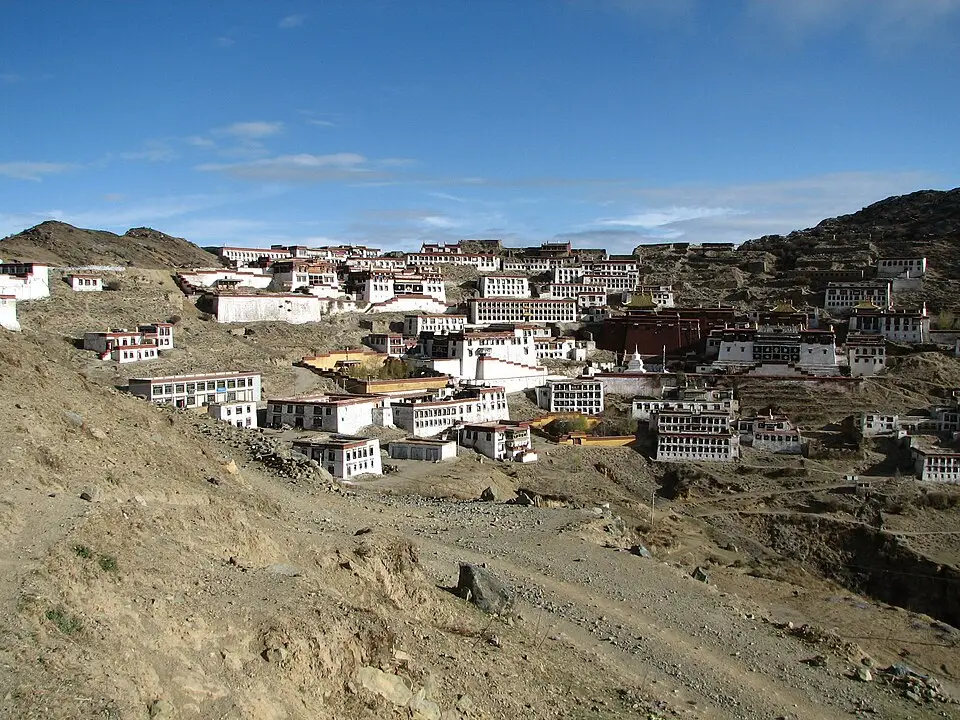
The same year he founded Ganden, the joyful, on a mountainside some twenty five miles from Lhasa, at about four thousand metres.
It became the mother monastery of the Gelug school.
From Tsongkhapa, Stanford Encyclopedia of Philosophy
His writings fill eighteen volumes: philosophy, ethics, tantra and the stages of the path.
From Tsongkhapa, Stanford Encyclopedia of Philosophy
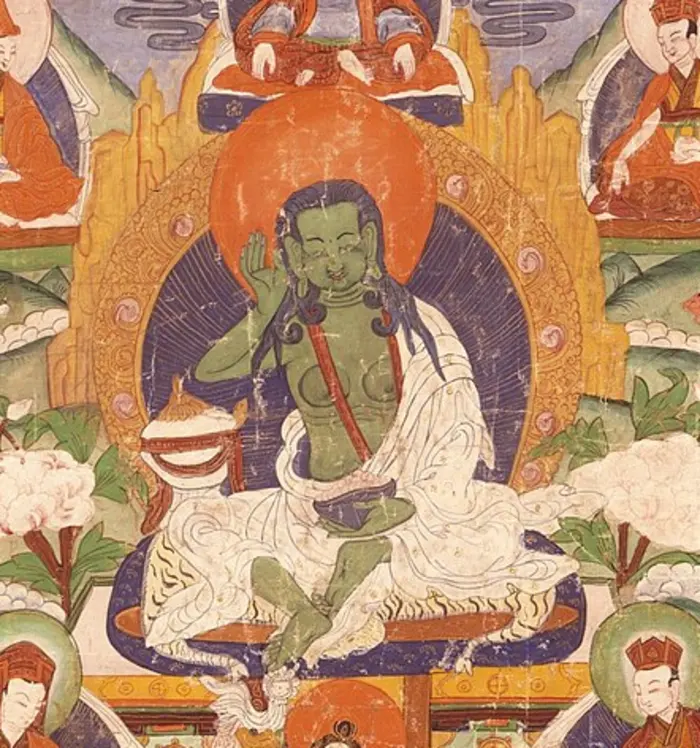
In a period of retreat in southern Tibet, he wrote, he entered into dialogue with Mañjuśrī, the embodiment of wisdom. Traditional biographies tell the same.
From Tsongkhapa, Stanford Encyclopedia of Philosophy
The wise should become certain that emptiness means dependent arising.

This week, after each session, write one line on what helped and one on what did not. Study your practice.
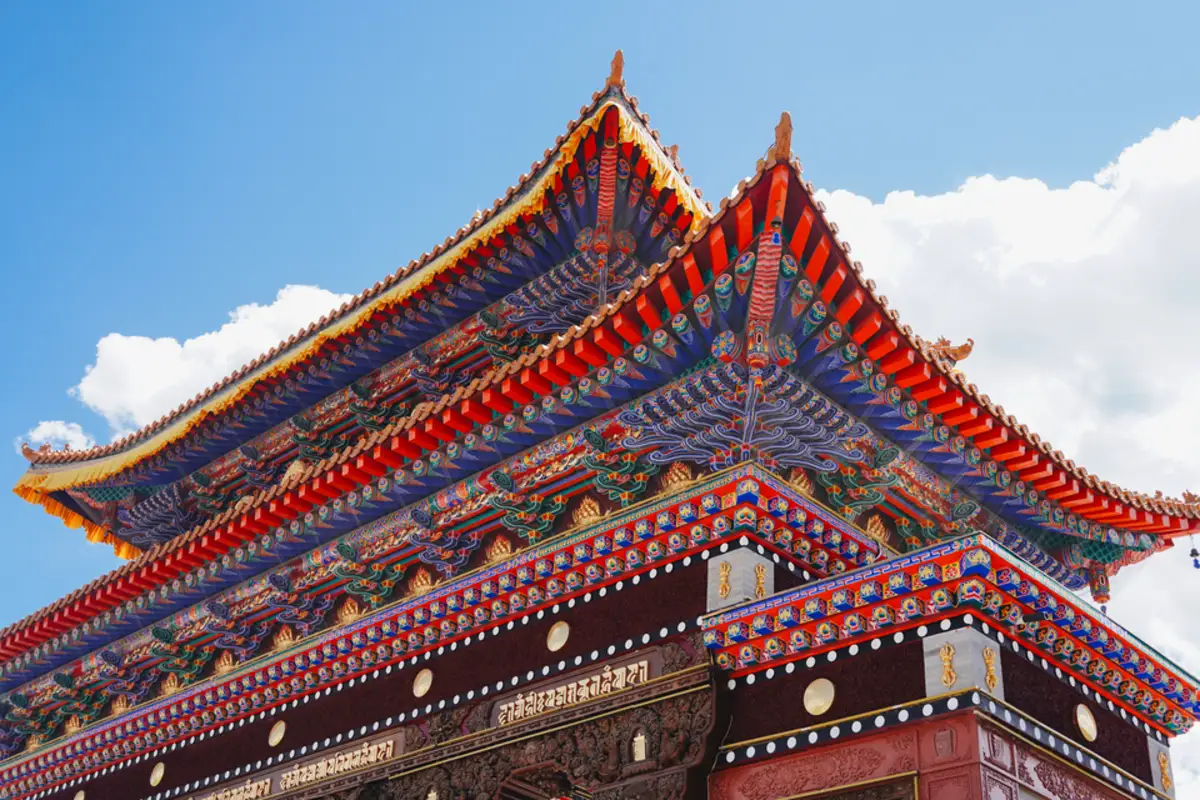
Ganden, Drepung and Sera grew into some of the largest monasteries in the world. Among his students was Gendün Drup, later counted as the first Dalai Lama.