Five elements and twelve animals turn together through sixty years.
The Tibetan calendar joins the elements with the animals, and sets beside them the mewa: nine numbers arranged in a magic square, each with its own colour.
The year turns at Losar
Losar follows the Phugpa calendar and moves between February and March.
Element and animal
Wood, Fire, Earth, Iron and Water, each held for two years, while twelve animals turn with them.
Nine mewa
Your birth mewa counts down through nine colours, one for each year.
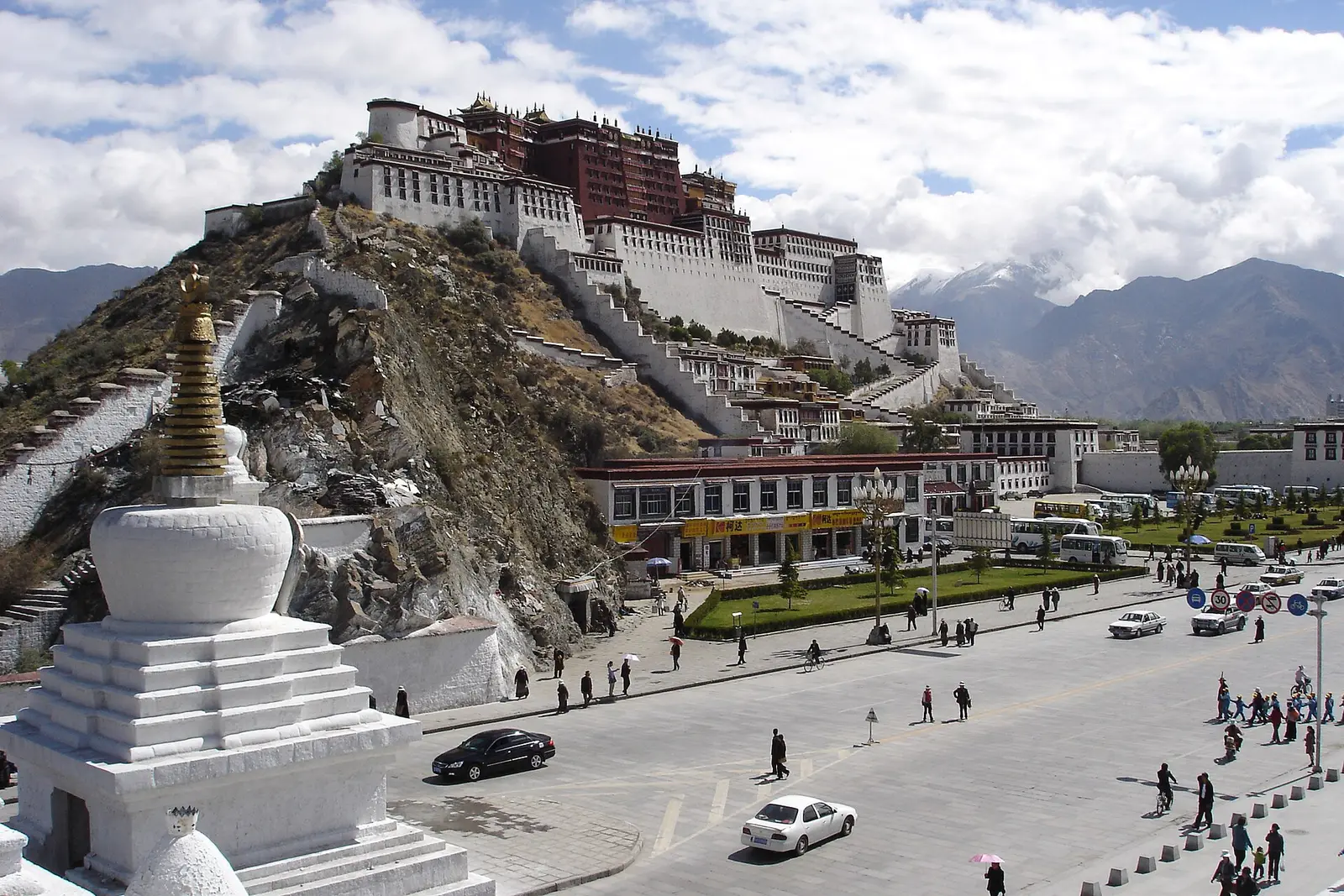
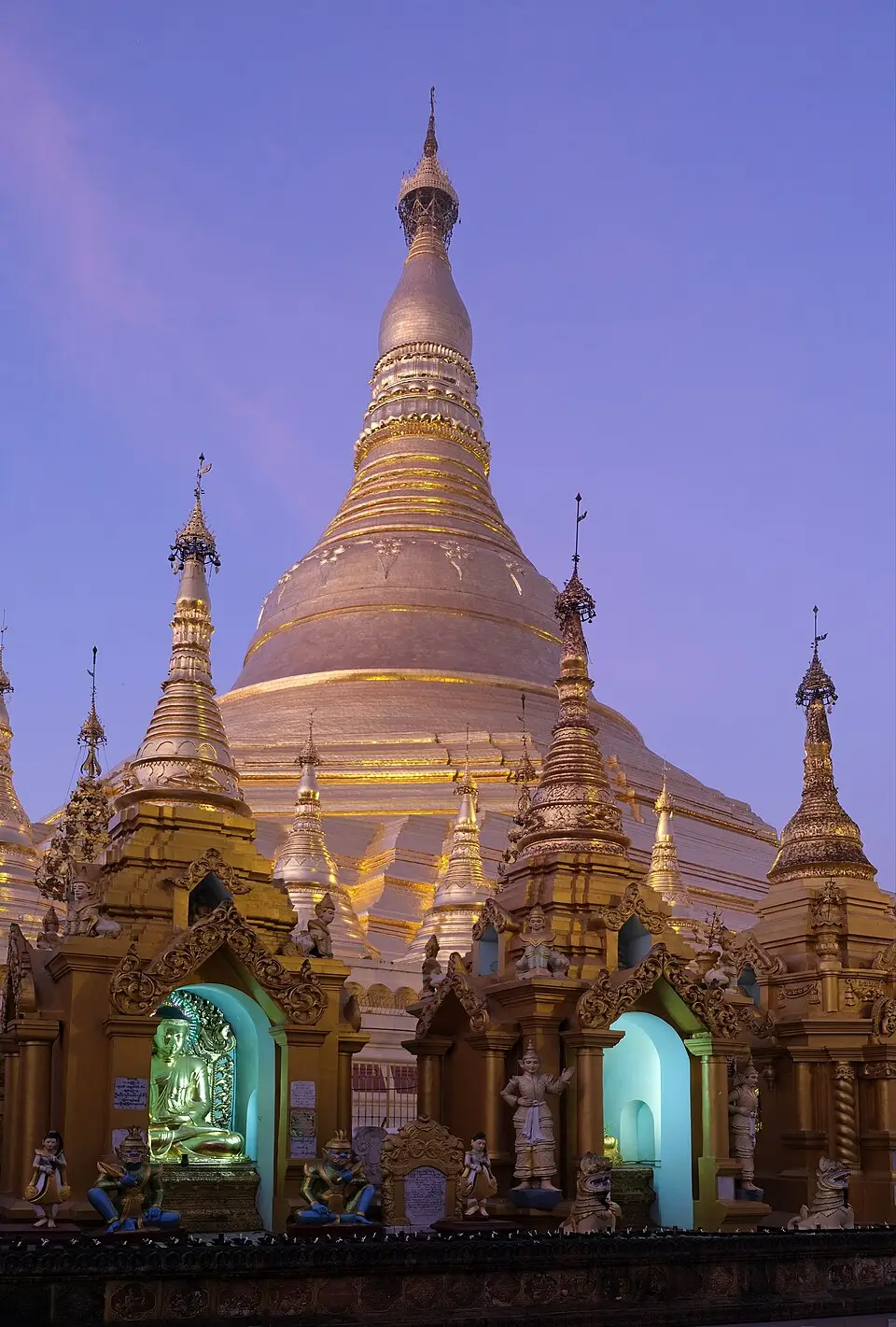
Potala Palace, Lhasa. Thirteen storeys of stone and silence.
The diamond vehicle
Tibet keeps Vajrayāna, the tantric form of Mahāyāna, carried over the Himalaya from India between the seventh and the thirteenth centuries.
Tibetan Buddhism joins the study of Indian philosophy with meditation, mantra and the bond between teacher and student. Four great schools grew from different lines of Indian masters: Nyingma, Kagyu, Sakya and Gelug.
Astrology, tsi, is one of the traditional sciences, taught beside medicine. The element and animal cycle came from China in the seventh century; the sixty year count follows the Kalachakra Tantra, which by tradition entered Tibet in 1027.
Practice is visible everywhere: prayer flags that give the wind a mantra, prayer wheels, and the kora, a slow walk around a holy place, always clockwise.
- 7th century
King Songtsen Gampo unites Tibet. His Nepali and Chinese queens bring Buddha images, and the Jokhang rises in Lhasa.
- c. 779
Under King Trisong Detsen, the abbot Śāntarakṣita and the tantric master Padmasambhava found Samye, the first monastery.
- 1042
The Bengali master Atiśa arrives in western Tibet and renews the teaching after a time of decline.
- 1073 · 1409
Sakya monastery is founded in 1073. Tsongkhapa founds Ganden in 1409, the seat of the Gelug school.
- 15th century
Three astronomers of the Phugpa school set the calendar Tibetans still use to find Losar.
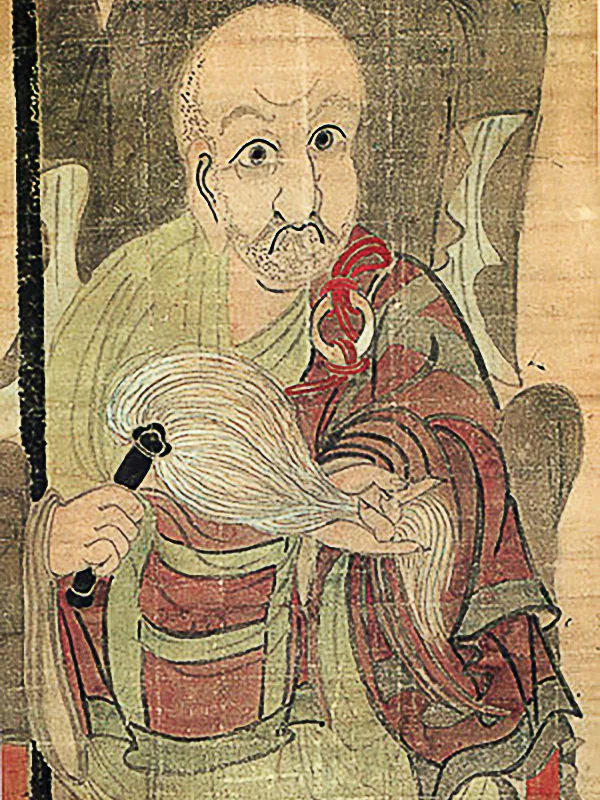
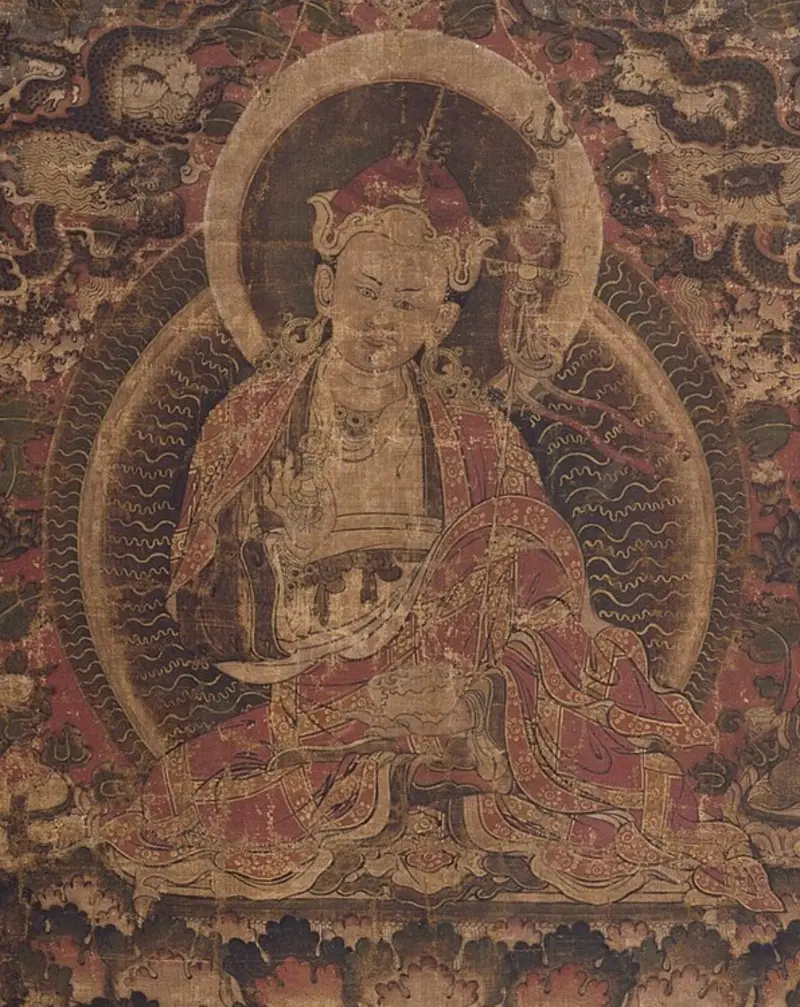
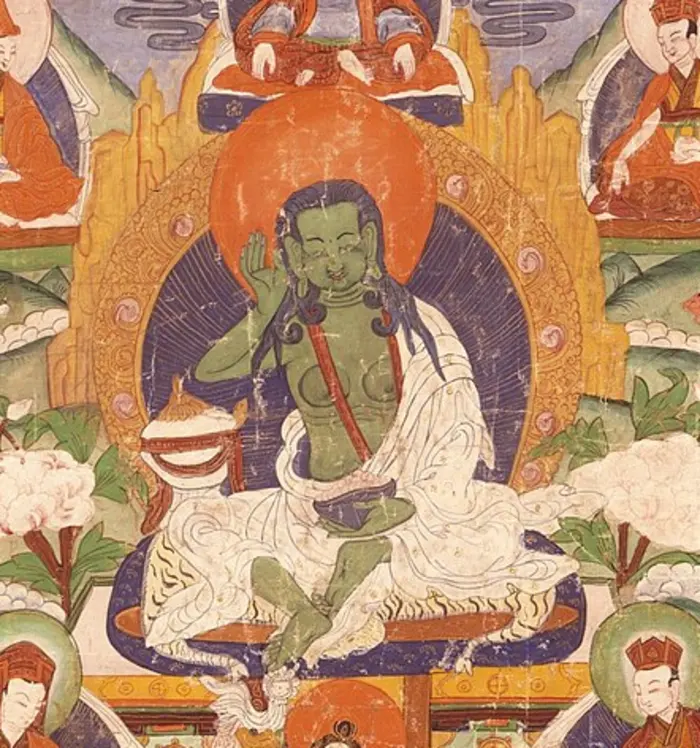
Padmasambhava, Guru Rinpoche
The tantric master who, by tradition, calmed the forces of the land so Samye could be built.
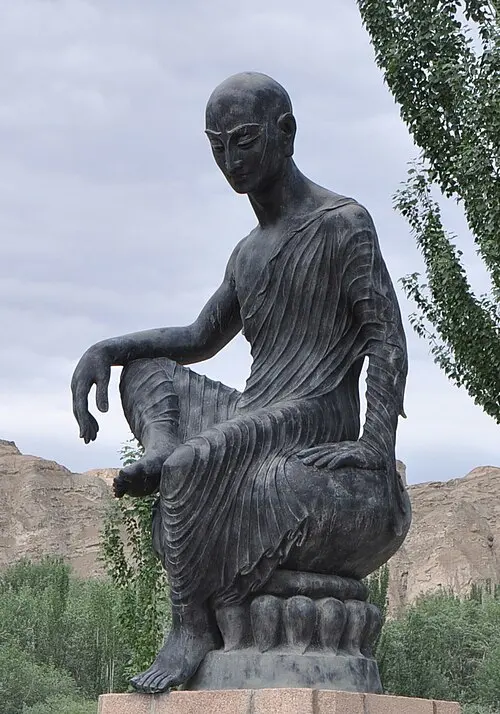
Read about him 982–1054Atiśa Dīpaṃkara
Indian master whose short text, the Lamp for the Path, shaped every school.
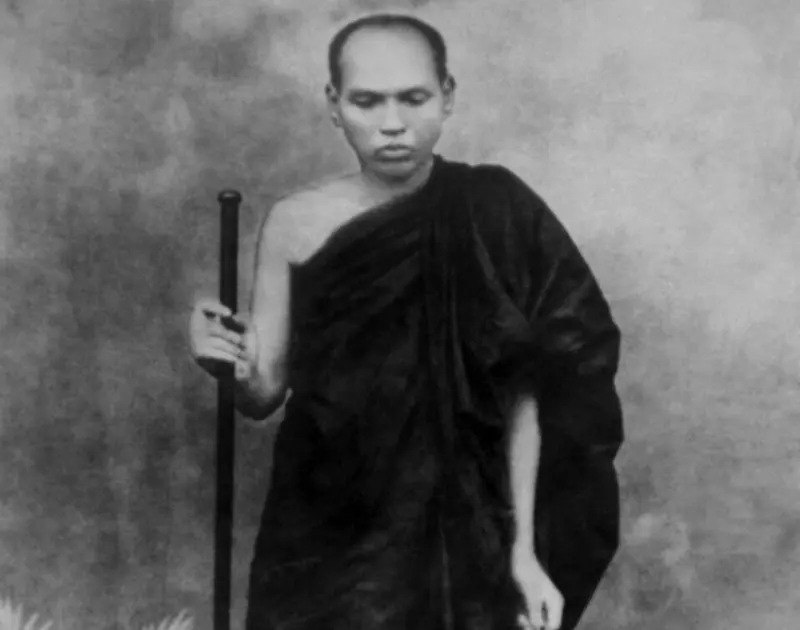
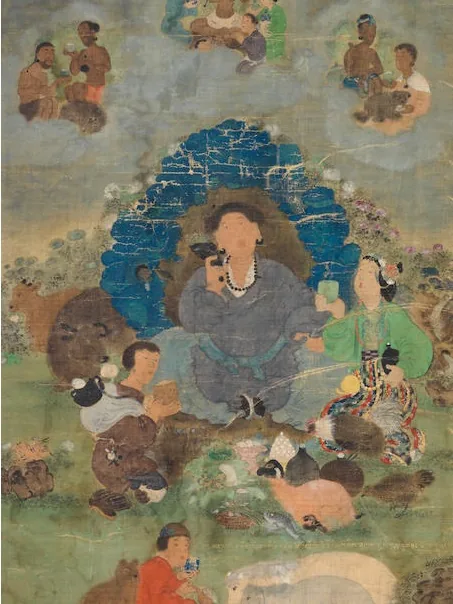
Read about him 11th–12th centuryMilarepa
Poet and yogi of the Kagyu line, who spent years in mountain caves and sang what he found.
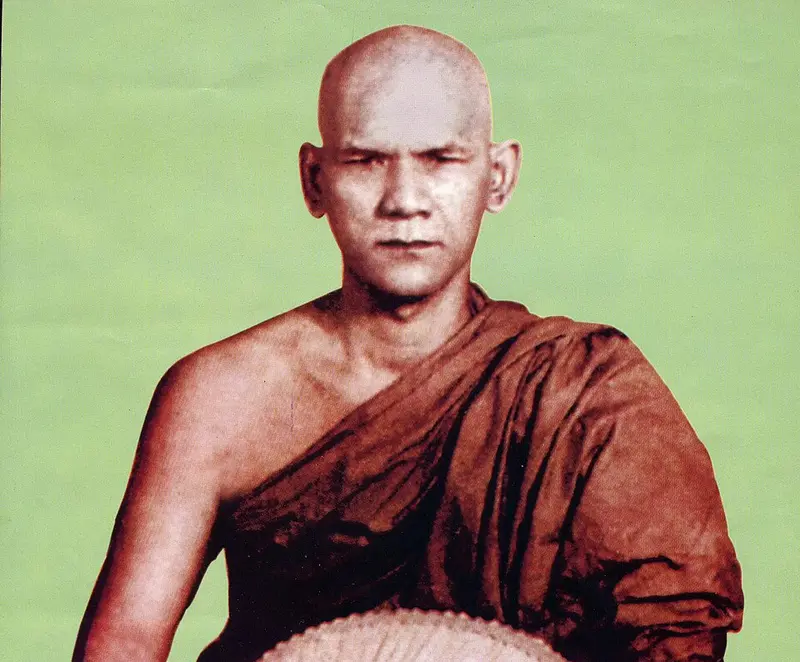
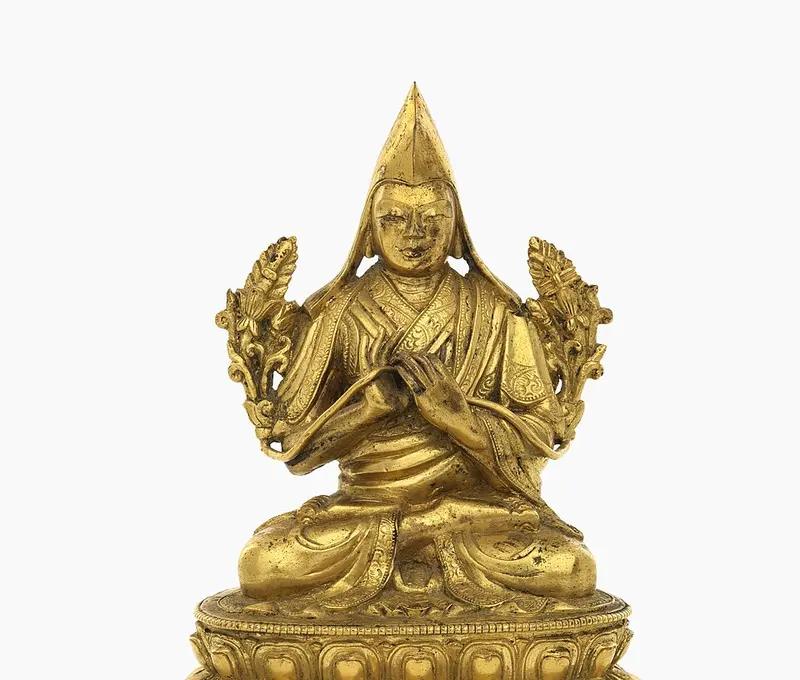
Read about him 1357–1419Tsongkhapa
Scholar and reformer, founder of the Gelug school.
Read about him c. 1012–1097Marpa Lotsāwa
Translator and householder of Lhodrak, student of Nāropa, teacher of Milarepa and father of the Kagyu school.
Read about himRead as a square: every row, column and diagonal adds up to fifteen.
Where the colours come from. Each colour is an element: white is iron, black and blue are water, green is wood, yellow is earth, red is fire. The square came to Tibet from China, and Tibetans say it is drawn on the belly of the golden turtle of Mañjuśrī.
Pick a mewa to read its colour.
Wood
Fire
Water
Water
Earth
Fire
Iron
Iron
Iron
Wood, Fire, Earth, Iron, Water.
Pick an animal to meet it.
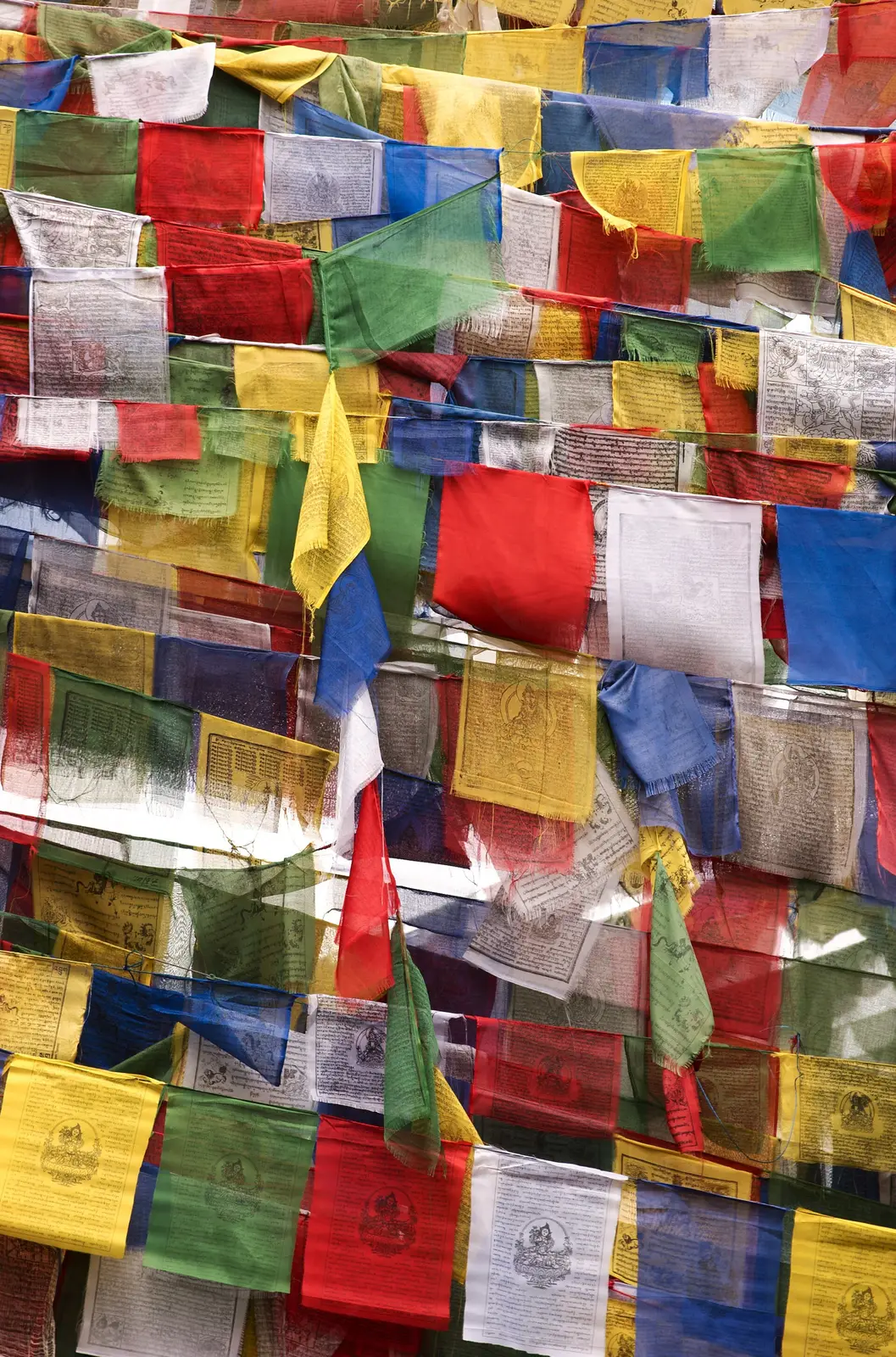
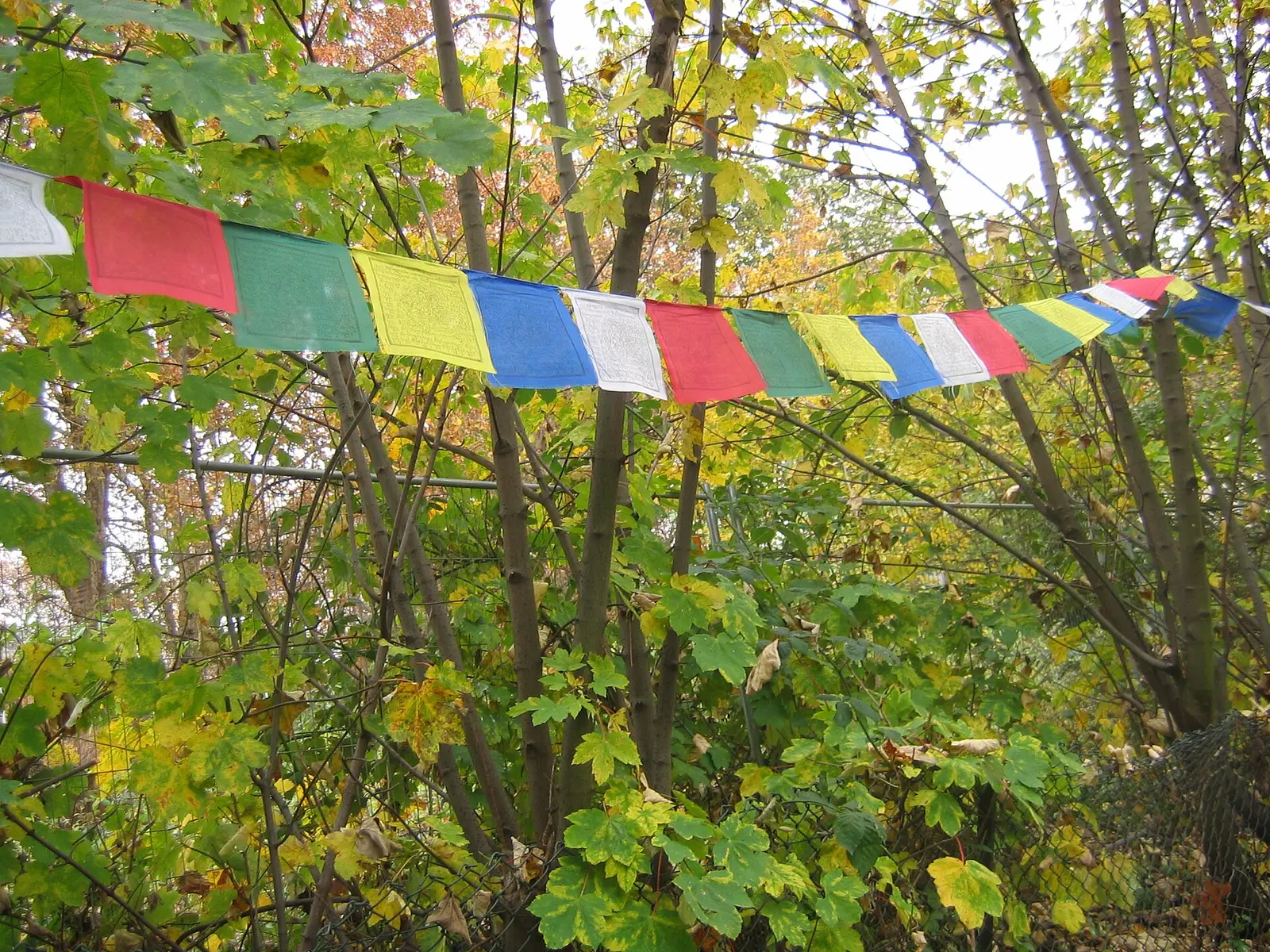
The wind does not choose which flag to move. It moves them all.